SME Digitalisation Voucher 2026: Aggregated Projects for Companies in the Torino Social Impact Network

Piedmont-based social enterprises planning a digital investment can apply for a non-repayable grant of up to €25,000 per company through the SME Digitalisation Voucher 2026, provided they meet the requirements set out in the call. Aggregated projects are also among the available participation options: Fondazione Piemonte Innova, a partner of Torino Social Impact, is developing projects that companies in the network can join.


The Voucher supports the purchase of digital technologies, goods and services. Consultancy and training activities linked to the investment may also be included, within the limits established by the call.

As an aggregating organisation, Fondazione Piemonte Innova supports companies in defining the project, preparing the application and managing the subsequent phases. For projects involving an aggregating organisation, the percentage of eligible expenses covered by the grant increases by 5 percentage points.

The aggregated projects are currently being developed. Companies interested in assessing whether their investment is eligible for the Voucher and in considering participation can write by October 1, 2026 to bandi@piemonteinnova.it.

More information about the call

October 15, 2026 – GIOVANI AL CENTRO Conference

On October 15, 2026, Fondazione Mamre ETS will organise the conference “Giovani al Centro MAMRE – Towards a Hybrid Sociocultural Space”, dedicated to the creation of a new space for young people in Turin’s Barriera di Milano neighbourhood. The event will open with institutional greetings from Stefano Lo Russo, Mayor of Turin.


The morning will be dedicated to presenting the design process, exploring the proposals developed and using virtual reality, alongside a discussion on experiences of hybrid spaces, sustainability and the project’s impact on the local area.

The Spazio Mamre Giovani project was created with the aim of developing a place for meeting, participation and opportunity, where younger generations can build skills, express themselves and contribute to the cultural and social life of the local community.

The process has involved young people, students, universities, schools, professionals, institutions, associations and local organisations. During the first half of 2026, the voices of 180 young people were collected, while 101 Architecture students developed 20 projects for the new space. Dialogue with local organisations also identified 50 possible activities.

In the afternoon, the process will continue with co-creation workshops coordinated by Urban Lab, focusing on activities, collaborations and the project’s next steps.

The event will provide an opportunity for dialogue and exchange, transforming the design work carried out so far into a new phase of collaboration, with the aim of building together a space capable of supporting young people’s autonomy and participation.

Save the date!

October 15, 2026, from 9:30 AM to 1:00 PM
Fondazione Mamre ETS – Piazzale Croce Rossa Italiana 185/A, Turin

Digital Sustainability: New Perspectives on Impact in the TSI Ecosystem

The first digital sustainability survey carried out by Sloweb APS together with the Torino Social Impact ecosystem has been completed: an initial assessment of the practices adopted by organisations within the network, whose results will be presented as part of Sloweb’s programme at Terra Madre Salone del Gusto 2026, dedicated to the responsible and sustainable use of digital technologies.


The series of events, taking place between September 24 and 27, represents an important step in the joint work of Sloweb APS and Slow Food, which was recently formalised through a Memorandum of Understanding aimed at promoting a digital culture aligned with the principles of sobriety, sustainability and responsibility through information, training and the dissemination of good practices.

A First Snapshot of the Ecosystem

The survey promoted by Sloweb explored several areas, from the management and end-of-life of devices to the choice of digital suppliers and services, from accessibility and data management to the use of artificial intelligence and the ways in which digital content is produced and consumed.

The results provide a multifaceted picture: alongside practices and areas of awareness that are already present, several fields emerge in which knowledge and capacity for action still need to be further developed. The survey was not designed to assess individual organisations, but to establish an initial shared baseline of awareness, identifying practices, needs and issues that will require further attention across the ecosystem.

The results will be presented on Friday, September 25, during the session “Sustainable Digital Transition for More Responsible and Resilient Companies – An Awareness-Building Pathway on the Impact of Digital Technologies and AI, with Testimonies from Local Companies.”

Also as part of Sloweb’s programme at Terra Madre, Torino Social Impact will take part on September 27, represented by its spokesperson Mario Calderini, in the third session of the Digital Ethics Forum, dedicated to “Good Local Practices in the Responsible Use of Digital Technologies by Associations and Institutions.”

Participation in the two events offers an opportunity to share the first evidence gathered within the ecosystem, while also outlining the initial steps of a pathway that Torino Social Impact intends to develop to support its ecosystem in building greater awareness of digital technology and adopting more sustainable approaches to the management of digital tools.

A Key Issue for the Social Economy

Digital sustainability is more relevant than ever as a lens through which to examine the relationship between innovation, responsibility and impact.

For Torino Social Impact, this first initiative represents a starting point for developing broader awareness of the issue and exploring the different dimensions connected to the use of digital technologies.

The aim is to progressively integrate digital sustainability into the impact policies of organisations and the territory, in line with the objectives of the Torino 2030 Metropolitan Social Economy Plan and with the broader challenge of combining economic development, sustainability and social inclusion.

View the full Sloweb programme at Terra Madre 2026 and register for the events.

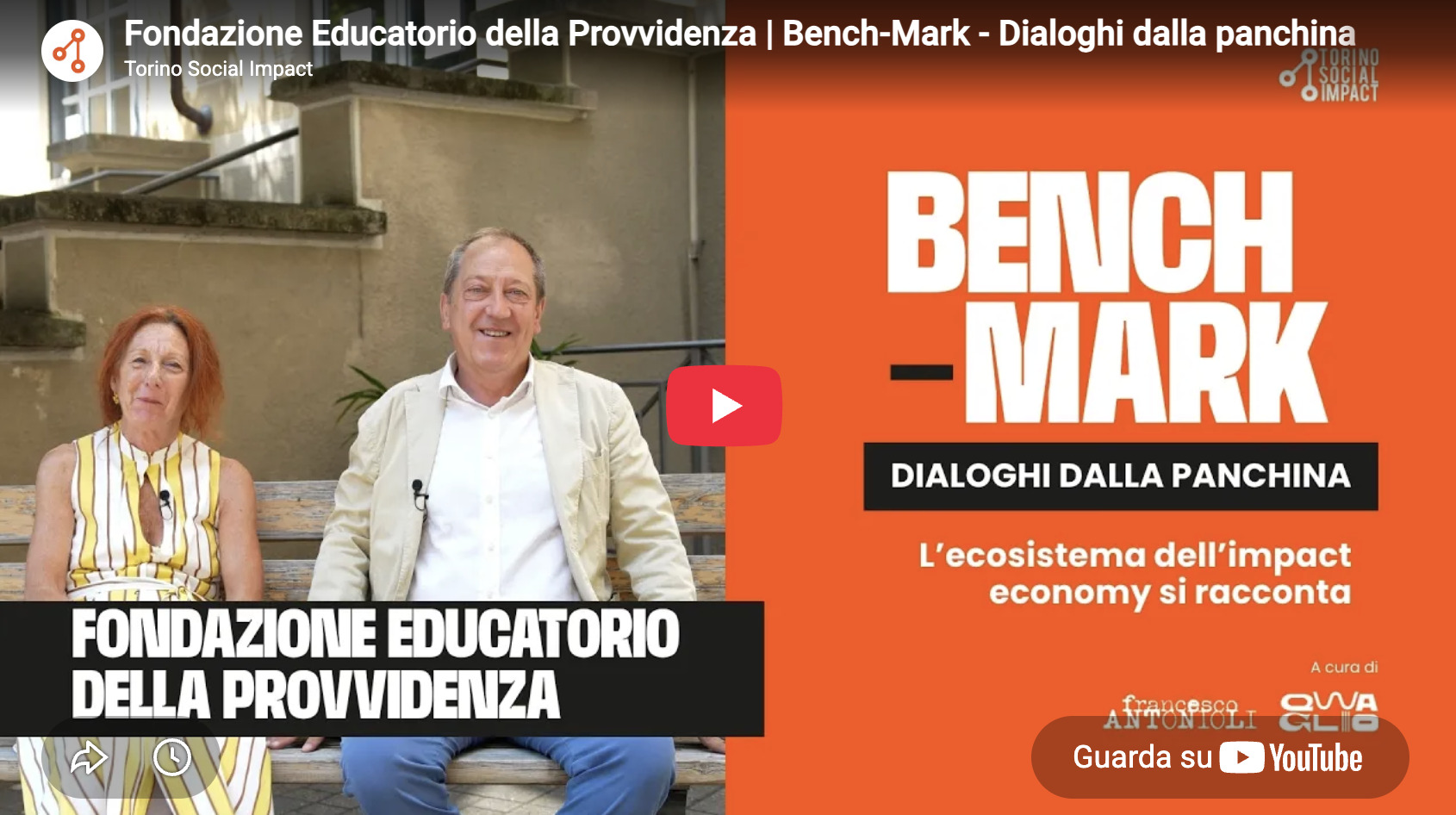
Bench-Mark | Ep. 113 – Fondazione Educatorio della Provvidenza

In this episode of Bench-Mark, we meet Fondazione Educatorio della Provvidenza, founded in Turin in 1722 and today committed to combining its philanthropic mission with new forms of social, educational and cultural intervention.

Its evolution and current work are explored through the perspectives of Carlo Majorino, President of the Foundation, and Paola Monaci, cognitive-behavioural psychologist and psychotherapist and Coordinator of Centro Psicotech Lab®.

The conversation brings together two complementary perspectives: on the one hand, how an institution with more than three centuries of history continues to rethink its role and approaches; on the other, the experimentation with psychotechnologies and new tools to support psychophysical well-being, prevention and care.

Interview by Francesco Antonioli.

Filmed and edited by Riccardo Quaglio.


Watch all past episodes of Bench-Mark here.

Slow Food Italia and Sloweb Sign a Memorandum of Understanding

Two movements, one common root. Digital sustainability enters the agenda of good, clean and fair food.


Slow Food Italia and Sloweb APS have signed a Memorandum of Understanding that brings the two movements together around a shared commitment: promoting a use of digital technology that is sober, clean and fair, starting from the agri-food sector.

The Memorandum is accompanied by long-term objectives and activities defined through 2030.

The first public event of the alliance will be Terra Madre Salone del Gusto, taking place in Turin from September 24 to 27, 2026, where Sloweb will be involved in a wide range of events dedicated to digital sustainability.

“For forty years, Slow Food has been raising awareness: about food, of course, but also about food production, biodiversity and more. We also need to raise awareness about digital technology, so that we are not overwhelmed by the power of tools that must remain at the service of humanity. We need digital education that enables us to make informed choices about how we feed our minds.” — Barbara Nappini, President of Slow Food Italia

“Over forty years, Slow Food has shown that it is possible to build a global movement starting from the concrete reality of everyday practices. We are doing the same with digital technology. This alliance gives us the network and legitimacy to do it at scale: we are ready.” — Mauro Bulgarini, President of Sloweb APS

The digital industry currently generates around 4% of global CO₂ emissions, a share higher than that of civil aviation and expected to grow with the spread of artificial intelligence. Every new smartphone has already generated 83 kg of CO₂ emissions before being switched on for the first time. Data centres worldwide consume as much electricity as entire countries, while artificial intelligence models require millions of litres of water to cool servers.

Meanwhile, the agricultural sector is under pressure from growing and unguided digitalisation: machinery that extracts data and cannot be repaired by farmers, platforms that create dependence on technology oligopolies, and digital traceability systems that often primarily benefit intermediaries.

Slow Food Italia and Sloweb share the belief that a digital transition not guided by sustainability criteria risks undermining the achievements of the agri-food movement. Good, clean and fair food can only be achieved through sober, clean and fair technologies and processes.

What the Memorandum Includes

The Memorandum of Understanding will remain in force for 24 months from the date of signing and may be renewed.

It defines several objectives.

Short-term objectives

  • Inform citizens, businesses and civil society about the real impacts of digital technology, using verifiable data and accessible language.
  • Educate through training programmes in schools, companies and Slow Food local chapters across Italy, including the Orto Digitale project.
  • Promote good digital sustainability practices, starting with the launch of the Sloweb Recipes at Terra Madre 2026.
  • Showcase companies and solutions working towards responsible digital technology, through a recognition system inspired by the Slow Food Presidia.

Medium-term objectives

  • Support applied research on digital sustainability in the agri-food sector, in collaboration with the University of Gastronomic Sciences of Pollenzo.
  • Integrate digital sustainability practices into companies within the Slow Food network through the Slow Digital Menu and self-assessment tools.

Terra Madre 2026: the First Testing Ground

The first public event of the alliance will be Terra Madre Salone del Gusto, taking place in Turin from September 24 to 28, 2026.

Sloweb will take part with a programme including a film series, performances and Slowlessons, including:

  • September 25: Corporate Training Event — an awareness-building pathway on the impact of digital technology for companies in the agri-food sector.
  • September 27: Digital Ethics Forum, sessions 3 and 4 — discussion and call to action on the relationship between digital technology and good, clean and fair food, involving local institutions and companies.
  • September 27: OCDR – Responsible Digital Consumption Observatory, with the participation of companies from North-West Italy.
  • September 28: Digital Pacts — agreements between families that help communities manage digital devices and services responsibly.

During Terra Madre, Sloweb Recipes. Recipes for a Healthier Digital Life will also be launched: ten practical recipes for a more conscious use of digital technology, distributed in HTML format and on postcards for the public.

Press contact • Slow Food
Slow Food Italia Press Office
press@slowfooditalia.it

Press contact • Sloweb
Pietro Jarre, Secretary of Sloweb APS
pietrojarre@sloweb.org

Impact Territories

Multi-stakeholder alliances to address social challenges. A column curated by Torino Social Impact for Avvenire’s Economia Civile supplement.


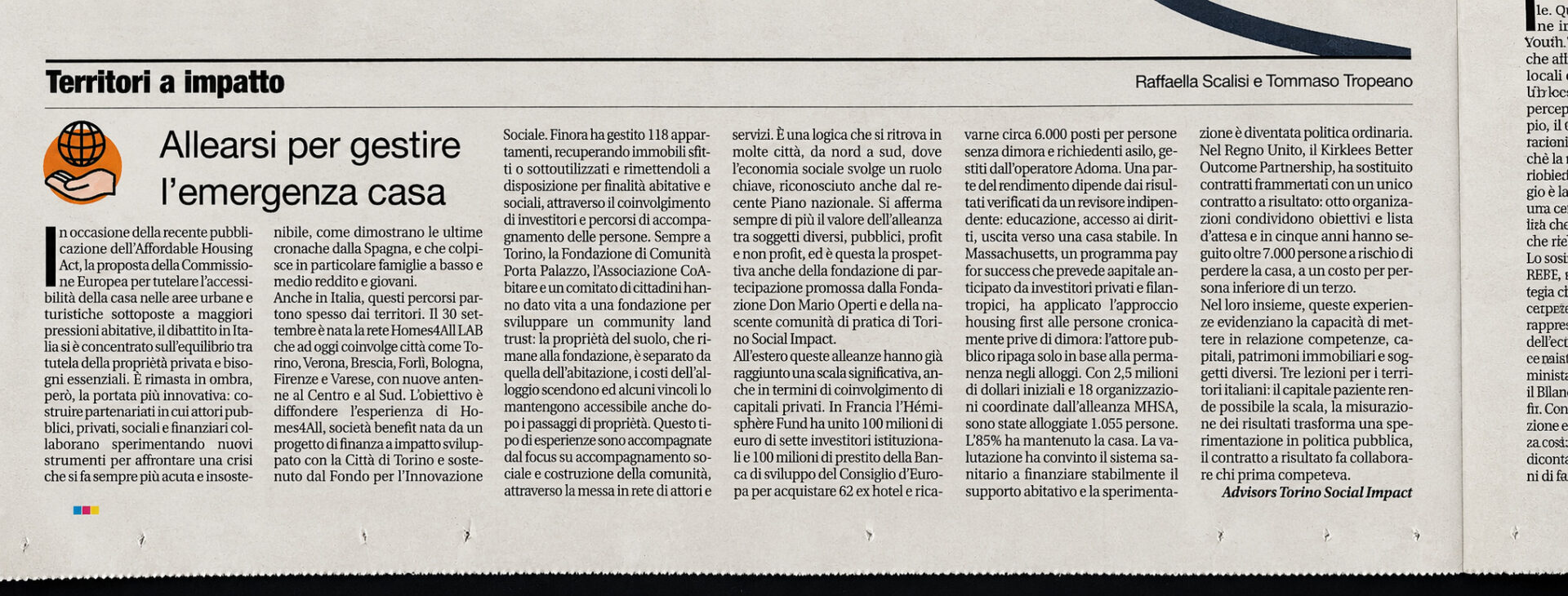
Impact Territories is the title of a monthly column that, starting in September, Torino Social Impact will curate in the pages of L’Economia Civile, the biweekly supplement of Avvenire.

This editorial project is based on the idea that local contexts are where innovative responses to ongoing social transformations can most effectively emerge and develop. It is at the territorial level that needs and vulnerabilities become more visible, and where social economy organisations operate most extensively, combining the creation of economic value with the pursuit of objectives of collective interest.

This local dimension becomes even more important in the face of the growing complexity of the challenges affecting European societies: difficulties in accessing housing, employment instability among younger generations, population ageing, migration, new forms of poverty and widening inequalities. These dynamics put social cohesion under pressure and can also contribute to weakening citizens’ trust in democratic institutions.

Torino Social Impact will therefore take readers on a journey through Italian and European territorial experiences that have developed innovative solutions and tools based on multi-stakeholder collaboration. Challenges of this complexity cannot be addressed through the isolated action of a single actor. It is therefore necessary to build forms of cooperation between public administrations, businesses, financial operators and Third Sector organisations, bringing together resources, expertise and capacity for action.

The first issue of the column, published on September 9 and written by Raffaella Scalisi and Tommaso Tropeano, mapped some of the countries most advanced in this field and the concrete tools developed through these multi-stakeholder partnerships, including social impact bonds, pay by results and outcome funds.

Starting with the next issue, on newsstands on October 7, the journey through Impact Territories will explore places where multi-stakeholder solutions are taking shape, dedicating each issue to a major social challenge: housing, NEETs, ageing, urban regeneration, labour inclusion and more.

The column will also highlight some of the most advanced Italian experiences, within a context that still shows a significant gap, mainly due to the limited presence of impact investors, weak administrative capacities, and the lack of shared metrics and a widespread culture of evaluation.

European Calls for Culture and Creativity in the Hub Webinar

On September 16, the European Projects Hub for the Social Economy organised a webinar dedicated to European funding opportunities for the cultural and creative sector, exploring three calls focused on artistic mobility, international cooperation and support for the Ukrainian cultural ecosystem.


During the meeting, three European opportunities of particular relevance to cultural and creative organisations were presented.

Perform Europe supports the cross-border circulation of performing arts works that have already been produced and are ready to tour, with a particular focus on sustainability, inclusion, diversity and climate action. The call provides grants ranging from €15,000 to €60,000 and requires a partnership of at least three organisations from three different Creative Europe countries.

ZMINA: Resilience focuses on strengthening and integrating the Ukrainian cultural and creative sector within the European landscape. The call supports co-creation projects between European and Ukrainian organisations, accompanied by activities for the public presentation of the works produced. Partnerships must involve at least two organisations from two Creative Europe countries, including at least one Ukrainian partner.

Culture Helps Solidarity aims to strengthen creativity, resilience and connections with communities in the Ukrainian context, during and after the war. The call supports individual grants, thematic projects and collaborations, complemented by mentoring, training, peer exchange, networking and the sharing of professional experiences and good practices. The programme also includes activities dedicated to intercultural dialogue, mental health support and the professional development of cultural managers.

The webinar provided an opportunity to explore the characteristics of the three calls, participation requirements, partnership structures and eligible activities, giving participating organisations useful elements to assess the possibility of developing and submitting their own project proposals.

Participants included Situazione Xplosiva APS, Rete Politecnica, Bottega di Cyrano – Teatro degli Acerbi, Al Cicapui ASD APS, Tedacà APS ETS, Itinerari Paralleli S.r.l., beeozanam ETS, Banca del Piemonte and Casa di Carità Arti e Mestieri.

The meeting also represents the first step towards accessing the free individual project development support pathway offered by the Hub: interested organisations can continue their work through tailored support dedicated to building and developing their project proposal.

The European Projects Hub for the Social Economy is an initiative developed in co-design with WECO Social Enterprise, with the support of the Torino Chamber of Commerce and the Compagnia di San Paolo Foundation.

OP4Impact: the Third Impact Capacity-Building Meeting

A new meeting for OP4Impact – Professional Orders for Impact: on September 17, at OFF TOPIC, the Community of Practice discussed skills, interprofessional collaboration and new pathways to support the social economy.


“Can culture be considered a genuine social infrastructure?” This was the question that opened the third meeting of the Impact Capacity-Building pathway of the OP4Impact Community of Practice – Professional Orders for Impact.

The pathway brings together the Order of Chartered Accountants and Accounting Experts of Turin, the Turin Bar Association, the Notarial Council of Turin and Pinerolo and the Order of Labour Consultants of Turin. It was created to respond to the needs of the social economy and to continue building, through an interprofessional approach, visions and actions capable of generating concrete impact.

The meeting focused on the experience of OFF TOPIC and its evolution from an association into a social enterprise: not simply a testimony, but a genuine case study of a cultural organisation that has succeeded in establishing strong roots in the local area, evolving its organisational model and generating new social and cultural outcomes. An experience that can also offer a valuable reference for other local organisations.

Ottavia Arenella, Project Manager at OFF TOPIC, presented the pathway, guiding participants through an experience in which culture, young people, territory and economic activities coexist within a single context. Founded as a cultural space and becoming a second-level association in 2018, OFF TOPIC is today a model in which value does not lie in a single event, but in maintaining a space that remains open, creates relationships and builds opportunities for youth participation.

Over the years, however, the organisation’s growth has raised new questions. In October 2025, OFF TOPIC underwent a transition from a social promotion association to a limited liability social enterprise. This change did not alter the organisation’s purpose, but required a rethink of how work is organised and decision-making processes are structured.

A particularly valuable aspect of this transition is that the process of amending the organisation’s statutes was supported by two professionals who are members of the Community of Practice. This provides a concrete example of how complementary professional expertise can serve as a lever for social economy organisations, contributing to the development of integrated governance and management models oriented towards generating and assessing social impact.

Among the challenges currently facing OFF TOPIC are the need to reduce precarious employment in the cultural sector, consolidate its organisational structure and define increasingly effective ways to measure and communicate the impact generated by its activities. These issues concern both the economic and social dimensions and make it essential to identify indicators capable of reflecting the complexity of the value produced.

It was precisely on this ground that the OFF TOPIC case opened up a broader reflection on the role of professionals in the social economy. As emerged during the discussion, the expertise of an individual professional is not enough: different skills need to converge, communicate through shared languages and move in the same direction.

From here, a discussion led by Caterina Soldi focused on governance and on the need to experiment with more participatory and collaborative models, in which decisions are the result of an integrated process. This perspective is particularly relevant for younger generations, who increasingly see work as a space in which to build their future while contributing to the wellbeing of the community.

The Theory of Change was the focus of the workshop aimed at activating the impact assessment strategy for Professionals for the Social Economy. The discussion helped clarify the connection between activities, outputs, expected changes and impact, bringing out a shared perspective: impact is not an additional dimension, but a lens through which strategies, governance, skills and relationships can be rethought.

In this direction, the pathway aims to build an interprofessional approach to the social economy, enhancing skills, cases and experiences and transforming them into new opportunities for collaboration and innovation. The objectives that emerged include strengthening skills and networking, integrating new approaches to the social economy and increasing awareness of the impact generated.

The next meeting of the Community of Practice will be open to the public: on Friday, September 25, as part of Terra Madre Salone del Gusto, the event “Social Economy: Feeding the Future with New Integrated Visions” will take place.

On this occasion, the “Professionals for the Social Economy” pathway will be presented. Developed within OP4Impact, it will consist of six training seminars accredited by the Professional Orders and dedicated to exploring the potential of the social economy through the complementarity of professional skills.

For more information on the programme and registration, please visit the following link.

Professional Mobility and Local Impact: Heimat Srl Launches “Montevecchio

Heimat Srl is expanding its hospitality services in Turin with Montevecchio, a new accommodation solution designed in particular for companies and professionals who need to stay in Turin for medium- to long-term periods.


The apartment is located in the city centre, conveniently positioned for both central Turin and Porta Nuova railway station. The solution was developed in response to increasingly common needs related to professional mobility: employees on business trips, temporary staff working in the city, consultants, researchers and people involved in local projects.

Montevecchio is a recently renovated 67-square-metre attic apartment on the fifth floor, with lift access. It features two single beds that can be joined together, a kitchen, a bathroom with walk-in shower, air conditioning, fibre Wi-Fi and utilities already active.

A Temporary Home, Without Starting from Scratch

The aim is to offer organisations a simple solution to manage, including for stays lasting several weeks or months. For this reason, Heimat Srl offers packages that can include utilities, internet connection and corporate invoicing, with solutions tailored to the duration and specific needs of each stay.

Montevecchio complements the other accommodation solution managed by Heimat Srl in Turin, which is mainly dedicated to shorter stays, allowing the company to respond to different needs for temporary accommodation in the city.

Hospitality and the Local Area

For Heimat Srl, hospitality is not simply about managing a living space, but is one of the areas through which the company develops services connected to people and the local community.

Alongside its educational, cultural and communication activities, the hospitality area aims to make arriving and staying in Turin easier for people travelling for work, training, projects and collaborations.

Companies, institutions and organisations looking for accommodation solutions for staff on business trips can visit the dedicated Montevecchio page.

For information, availability and customised requests: heimat.locazioni@gmail.com

From Courses to Internships: Enaip Piemonte Connects Training and Work

The social impact storytelling developed in collaboration with Futura News continues — the outlet of the Master in Journalism of Turin, offering a perspective on the Torino Social Impact ecosystem through the work of young journalists.


The new article in Visione Futura tells the story of the work carried out by Enaip Piemonte, one of the leading training agencies in the area, committed to supporting young people, adults, people looking for employment and those undergoing professional reskilling towards new job placement opportunities.

From the voices gathered in the article, a model emerges that brings together training, guidance and employment services. From vocational courses to individual interviews, from CV review to dialogue with companies and the activation of internships, Enaip Piemonte builds pathways capable of bringing skills closer to labour market needs, placing people at the centre and turning training into a concrete step towards work.

Read the article on Futura News

A Bit of [hi]story

From September 30 to October 4, 2026, Turin will host the sixth edition of A Bit of [hi]story, the free festival organised by the Piedmontese Computer Science Museum – MuPIn. In the year of its fifteenth anniversary, the museum presents “Digital Balances: the Real Costs of Computing”, a journey through the history of computers, artificial intelligence and sustainability.


On Saturday, October 3 and Sunday, October 4, the festival will open to the public at Docks Dora, Via Valprato 68, with talks, exhibitions and opportunities for dialogue for enthusiasts, families and curious visitors. Topics will include the role of supercomputers in weather forecasting, the history of Apple and Olivetti, the environmental impact of digital technologies, the right to repair and the contribution of women to computer science.

Guests over the weekend will include Luca Mercalli, Guido Saracco, Gastone Garziera, Giorgio Garuzzo, Fabio “Kenobit” Bortolotti, don Luca Peyron and Ugo Vallauri. On Saturday evening, there will also be a DJ set by Kenobit and a mini Kick-Off tournament. The opening is scheduled for Saturday, October 3 at 10:30 AM in the Cingomma space.

From September 30 to October 2, activities will be dedicated to schools at the Metropolitan City of Turin headquarters, Corso Inghilterra 7. Conferences and workshops will address digital security, algorithms, cryptography, fake news and new perspectives on AI, with a contribution by mathematician Olivia Caramello on topos theory.

Participation is free. To organise class attendance: eventi@mupin.it.

Programme and updates: www.abitofhistory.org

Gen[TI] – A Generation of Talents. An Opportunity for New Enterprises, Startups and SMEs

Gen[TI] – A Generation of Talents offers new enterprises, startups and SMEs in the Piedmont ecosystem the opportunity to host young talents through a 4-month paid internship covered by the project.


Who Can Participate

New enterprises, startups and innovative SMEs* with an operational headquarters in Piedmont can apply.

If you want to connect with motivated and highly qualified talents who can actively contribute to the development of projects, technological challenges and business growth pathways, this is an opportunity for your company.

*Please read carefully the Eligibility Requirements in the Call for Companies and/or in the FAQs available on the website.

What We Offer to Companies

  • Full financial coverage of four months of extracurricular internship
  • Facilitation of the match between talents and companies
  • Administrative support for the activation of the internship
  • Up to 40 hours of training and mentoring for talents on the development of professional, entrepreneurial and AI skills
  • Certification for talents of the skills acquired
  • Booster for companies: tailored support by Réseau Entreprendre Piemonte
  • GenTI Pass for companies: training on AI, ecosystem discovery experience and corporate matchmaking

When

  • The call is open on a rolling basis from July 29, 2026 to January 31, 2027
  • Internships will be activated in two time windows: the first approximately between October/November 2026, the second between February/March 2027

How to Apply

Applications, internship opportunities and the matching process between talents and host companies will be managed through the GenTI platform.

Information Webinar

Register here to take part in the introductory webinar, which will be held on September 23 at 4:00 PM.

The webinar is addressed both to young talents and to companies interested in taking part in GenTI.

Find Out More

Contact Réseau Entreprendre Piemonte for information or clarifications:

Gen[TI] is an experimental project promoted by the Compagnia di San Paolo Foundation and implemented by Réseau Entreprendre Piemonte, together with technical partners EnAIP Piemonte, Fondazione LINKS and University of Turin.

Amapola Publishes “Untangling the Thread”, Its 2025 Impact Report

19 community projects and 1,044 hours dedicated to benefit activities. The new document adopts the VSME as a reference and integrates a Social Impact Assessment for the first time.


“Untangling the Thread” is the title of the 2025 Impact Report by Amapola, the consultancy company specialised in sustainability since 2009 and part of the Torino Social Impact network.

The concept chosen for this edition is that of warp and weft. It is an image that recalls, on the one hand, the need to interpret a phase marked by growing economic, social and environmental complexity and, on the other, the way in which Amapola understands impact generation: as the result of the interweaving of people, projects, relationships, decisions and skills.

The Report therefore tells the story of a year in which the company continued to grow its activities and projects, while also working to make its path as a Benefit Company clearer, more structured and more measurable.

The Main 2025 Figures

In 2025, Amapola dedicated a total of 1,044 hours to benefit activities, carrying out 19 community projects. In its consultancy work, it collaborated with 97 clients and reached the cumulative milestone of 240 sustainability reports produced.

A central part of the pathway concerns the people in the team. During the year, an average of 45 hours of training per person was provided, while flexibility and smart working policies continued, with 933 days worked remotely.

At the same time, the company strengthened its commitment to gender equity and work-life balance, through already consolidated measures, such as the extension of parental leave, and new initiatives introduced in 2025. These include the Blind CV, designed to make selection processes more equitable, and the Caregiver Bonus, which provides additional leave for those carrying out care activities.

The improvement pathway continues beyond the reporting period. After obtaining the EcoVadis Silver Medal in 2025, in 2026 Amapola reached the Platinum level, the highest level in the rating system. This result recognises the progress made in recent years to make sustainability policies, processes and tools more structured.

A More Readable and Measurable Impact

The focus on translating commitments into policies, initiatives and concrete results is accompanied by broader work on the way Amapola defines and measures its impact. One of the main developments described in the Report concerns the common benefit objectives, which have been reduced from eleven to five.

“We chose to concentrate our objectives not to reduce our commitment, but to make it clearer and more effective. After several years as a Benefit Company, we felt the need to take a step forward: to define more readable priorities, better connect objectives, actions and results, and strengthen our ability to measure what we generate,” comments Luca Valpreda, Founder of Amapola.

Reporting is also evolving. For the second year, the Report uses the VSME, the European voluntary sustainability reporting standard for SMEs, as a reference, while maintaining its connection with the SDGs of the 2030 Agenda. This is accompanied by a further step in measurement: the first Social Impact Assessment carried out by Amapola, dedicated to the Meet the CSR Leaders initiative.

The project, created to foster dialogue between younger generations and sustainability professionals, will return with its fifth edition in October 2026 at the CSR and Social Innovation Fair. The Social Impact Assessment made it possible to complement the reporting of activities with a more in-depth reading of the effects generated by the initiative, testing an approach that Amapola intends to integrate increasingly into the design of its benefit activities.

Facing Complexity

“For us, being a Benefit Company means staying within complexity without looking for shortcuts,” state Anna Filippucci, Elisa De Bonis, Irene La Porta and Micol Burighel, members of the Amapola Impact Board. “Numbers are essential to guide our work, but not everything that generates value produces immediate effects. Some impacts become visible over time, when the different threads begin to reveal a pattern. This is why we continue to measure, learn and improve, holding together economic objectives and common benefit.”

“Untangling the Thread” therefore presents not only the results achieved in 2025, but also the way in which Amapola is progressively refining its tools, objectives and ability to assess its impact. Because, as the Report’s concept suggests, the pattern emerges precisely from the ability to recognise the different threads and understand how to hold them together.

The 2025 Impact Report by Amapola is available here.

Making Europe – Looking Further Ahead

How far can we look when we decide to do it together? On Tuesday, September 29, 2026, from 6:30 PM, Making Europe – Looking Further Ahead comes to the Mole Antonelliana for an event dedicated to space research and to the choices that help shape our present.


It starts from a little-known yet decisive story: that of Edoardo Amaldi and the birth of European space cooperation. The story will be told live by Lorenzo Pregliasco and Lorenzo Baravalle, in a special live and previously unreleased version of the podcast Making Europe.

It will also offer a preview of the theme at the heart of the episode, which will soon be released on all major listening platforms: a journey between history and the present to understand how scientific collaboration opened paths that we still follow today.

Bringing this story back into the present will be Caroladivù, with a contribution dedicated to what research and innovation mean today for younger generations.

But the audience will not simply be spectators. During the event, each participant will have a limited number of “mission credits” and will be asked to choose which priorities to allocate them to: from space research to climate, from health to science education.

The choices collected will contribute to the creation of the Constellation of Turin, a visual restitution by the artist Kalla, which will take shape starting from the audience’s input.

The event will be hosted by Carolina Sardelli, journalist at TgCom24.

The event will conclude with an informal networking moment in the spaces of the Mole Antonelliana. At the end of the event, participants will also have the opportunity to go up the Mole free of charge using the panoramic lift and look at Turin from above. A simple way to close the evening while continuing, quite literally, to look further ahead.

Accreditation link

Terra & Tech: Innovation, Experimentation and Results

Terra & Tech: Innovation, Experimentation and Results

First presented in 2023, Terra & Tech is the national open innovation programme for Italian viticulture, organised and promoted by the association Filiera Futura in collaboration with the Innovative Companies Incubator of Politecnico di Torino (I3P). Since its launch, the main objective of the initiative has been to identify the evolving needs of the wine sector through direct dialogue with the key actors in the supply chain, and to involve a selection of innovative startups capable of implementing technological solutions to support the wine industry.


After a series of discussion tables held in 2024 with the six banking foundations partnering in the programme — Fondazione CRC, Fondazione Cariverona, Fondazione Cassa di Risparmio di Lucca, Fondazione Carifac, Fondazione Cassa di Risparmio di Jesi and Fondazione con il Sud — and their networks of associated producers, in 2025 over 70 project proposals were collected through an international call for startups.

Among all applications, the 20 most promising solutions were selected and a series of field trials was launched — still ongoing in 2026 — across several Italian territories, to test the potential of the innovative technologies developed by the young companies.

The event scheduled for Thursday, September 24, 2026, from 10:00 AM, in person at the Sala Agorà of the I3P Incubator in Turin, will offer a feedback session on the results achieved by the programme. It will be an opportunity to publicly explore the opportunities for dialogue and improvement generated by Terra & Tech, the experiences developed by participating startups in producers’ vineyards, and the prospects for further development of the technological systems used, based on the data collected during the pilot tests.

The initiative is organised as part of Terra Madre Salone del Gusto 2026.

The event on September 24 will also be an opportunity to share the first previews of the second edition of the Terra & Tech programme, which will continue to grow through new activities focused on the concrete needs of producers, new research into the most disruptive technologies for the agri-food sector, and new innovation processes to be developed with and across Italian territories, for the benefit of all the actors involved.

How to Participate

The meeting with the promoters and protagonists of Terra & Tech will take place on Thursday, September 24, 2026, from 10:00 AM, in person at the Sala Agorà in the I3P Incubator headquarters, located inside the Politecnico di Torino Campus and accessible from the pedestrian entrances at Corso Castelfidardo 34 and Via Borsellino 53/N.

Participation in the event is free, upon registration on Eventbrite.

Programme

10:00 AM | Welcome and registration of participants in the room

  • Vincenzo La Forgia, Filiera Futura, Terra & Tech Project Manager

10:15 AM | Institutional greetings

  • Elena Giannini, Vice President of Filiera Futura
  • Paola Mogliotti, Director of I3P

10:30 AM | The first edition of Terra & Tech: objectives, phases and results achieved

  • Adriano Marconetto, Serial Entrepreneur and Business Angel
  • Riccardo Valpiani, Business Consultant at I3P

10:50 AM | Field trials by innovative startups

  • Testimonies from the young companies involved in the project

11:20 AM | Preview of the second edition of Terra & Tech

11:30 AM | Conclusions

Cultivating the Future – Work, Legality and Value in Agri-Food Supply Chains

Is it possible to build agri-food supply chains capable of placing social sustainability at the centre? This will be discussed at “Cultivating the Future – Work, Legality and Value in Agri-Food Supply Chains”, a conference organised and promoted by Filiera Futura and Fondazione CRC, in collaboration with technical partner Weco Srl Impresa Sociale.


The meeting will bring together professionals and researchers from the sector to discuss the main critical issues concerning working conditions in agricultural supply chains, while presenting concrete experiences, regulatory perspectives and future scenarios.

The event, held as part of Terra Madre Salone del Gusto 2026 by Slow Food Torino, will take place on September 23, starting at 2:30 PM, at the Corso di Campagna Amica Market – Casa Coldiretti, Corso Vittorio Emanuele II 50, Turin.

The event is free, with registration required. Places are limited.

More information

September 25, 2026 — OP4Impact Goes to Terra Madre!

On Friday, September 25, 2026, as part of Terra Madre Salone del Gusto 2026, the event “Social Economy: Feeding the Future with New Integrated Visions” will take place at the headquarters of the Order of Chartered Accountants and Accounting Experts of Turin.


The event will offer an opportunity for dialogue on what it means to “feed the future” through new visions for the territory, oriented towards the common good and social impact, starting from the Torino 2030 Metropolitan Social Economy Plan.

The event is promoted by the Order of Chartered Accountants and Accounting Experts of Turin, the Turin Bar Association, the Order of Labour Consultants of Turin, the Notarial Council of the United Districts of Turin and Pinerolo, the Turin Chamber of Commerce, Torino Social Impact and Cottino Social Impact Campus. For three years, these organisations have shared the pathway of the OP4Impact – Professional Orders for Impact Community of Practice, a space for dialogue among different areas of expertise to build an interprofessional approach to the social economy.

The meeting will launch the project “Professionals for the Social Economy 2030”, developed within OP4Impact with the unprecedented aim of creating a cycle of six accredited training seminars promoted by the Professional Orders, to jointly address the potential of the social economy through the complementarity of professional skills.

Where and when

Order of Chartered Accountants and Accounting Experts of Turin
Via Carlo Alberto 59, 10123 Turin

Friday, September 25, 2026
3:00 PM – 5:00 PM

Programme

3:00 PM — Opening remarks

  • Salvatore Regalbuto, President of the Order of Chartered Accountants and Accounting Experts of Turin
  • Guido Bolatto, Secretary General of the Turin Chamber of Commerce
  • Marta Messa, Secretary General of Fondazione Slow Food ETS
  • Paolo Di Croce, General Manager of Fondazione Slowfood ETS

3:30 PM — Feeding the future with new integrated visions

  • Barbara Nappini, President of Slow Food Italia
  • Serena Milano, Director of Slow Food Italia

4:00 PM — Professionals for the Social Economy. The OP4Impact experience: Manifesto, strategic objectives and new projects for the city

Opening and moderation:

  • Caterina Soldi, Cottino Social Impact Campus – OP4Impact Coordination

Speakers:

  • Davide Barberis, Chartered Accountant – Order of Chartered Accountants and Accounting Experts of Turin
  • Luca Furfaro, Secretary General – Fondazione Studi dei Consulenti del Lavoro di Torino
  • Luigi Gili, Lawyer – Turin Bar Association
  • Gabriele Gili, Notary – Notarial Council of the United Districts of Turin and Pinerolo

4:45 PM — Q&A and conclusions

Registration

The event is addressed to professionals from the promoting Professional Orders and to interested citizens.

For information and registration, please contact the Secretariat of the Order of Chartered Accountants and Accounting Experts of Turin: segreteria@odcec.torino.it

Benefit Competition: Applications Open for the Fourth Stop in Padua

Applications are open until September 14, 2026 for the fourth stop of the Benefit Competition, the first national competition dedicated to Italian Benefit Corporations and to businesses intending to undertake this path.


The Benefit Competition continues: the initiative promoted by the Ministry of Enterprises and Made in Italy to highlight and connect companies committed to combining competitiveness, corporate responsibility and positive impact on local territories.

The fourth stop is scheduled for October 16, 2026 in Padua, at the SMACT Competence Center, and is organised in collaboration with the Padua Chamber of Commerce as part of City Vision Week.

The event is dedicated to companies that have developed projects and initiatives capable of generating, alongside profit, concrete benefits for communities, the environment and the territories in which they operate. Participation is open to Benefit Companies already established and legally based in Italy, as well as to companies that are considering adopting this legal form and intend to begin a path aligned with the principles of responsible and sustainable enterprise.

The Benefit Competition unfolds through a national pathway structured around territorial stops. For each event, an application phase allows finalist companies to be selected and given the opportunity to present their projects during an in-person event, in front of a qualified jury and an audience made up of institutions, companies, local stakeholders and sector experts.

The Padua stop takes place in a context of growing attention towards the benefit model. According to data from the Benefit Companies Observatory, updated to June 30, 2026, Italy counts 5,968 Benefit Companies, with a 15.64% year-on-year increase and a total production value of over €71 billion. Piedmont accounts for 7.07% of Benefit Companies nationwide.

For Torino Social Impact, the spread of the benefit model represents a key area of work to strengthen the culture of impact, promote business models oriented towards the common benefit and support the evolution of the social economy, also through opportunities for dialogue, networking and the promotion of the most innovative experiences.

Applications are open until September 14, 2026.

More information on the Benefit Competition

DO Impact: the Italian Capacity-Building Pathway Comes to a Close

On Wednesday, July 22, the local capacity-building pathway of the European project DO Impact — Digital and Data-Driven Opportunities to Strengthen the Social Economy Impact — came to a close. The project is funded by the European Innovation Council and SMEs Executive Agency (EISMEA) under the SMP-COSME-2023-SEED-01 call.


The collaboration between Fondazione Piemonte Innova as project coordinator, Torino Social Impact and Tiresia – Politecnico di Milano led to the creation of eight workshops dedicated to small and medium-sized enterprises in the social economy. Between September 2025 and July 2026, the workshops involved 376 participants.

The Italian pathway was developed as a local extension of the transnational learning journey, jointly implemented by the European partnership of DO Impact and addressed to social economy support organisations.

The stated objective was twofold: on the one hand, to provide organisations with tools to understand the role of digitalisation, data strategies and ethical practices in data use, in order to drive positive change in the social sector; on the other, to offer practical and immediately applicable skills to measure social impact, adopt artificial intelligence responsibly and build collaborative data ecosystems. Each session addressed a different topic, with increasing levels of complexity, starting from essential basic skills and moving towards more advanced applications of artificial intelligence, data visualisation and data storytelling.

The first session, held on September 22, 2025 in Turin, laid the foundations for the entire pathway. The second workshop, held the following day, shifted the focus to data as a strategic asset for the development of organisations, moving beyond the view of data collection as a bureaucratic requirement and considering data as a strategic lever for everyday activities.

The third session, organised on March 26, 2026, provided an opportunity for networking between tech startups and social economy organisations, while the fourth workshop, held on April 17, 2026 as part of Biennale Tecnologia, allowed participants to reflect on and test themselves against social impact measurement.

The capacity-building pathway then moved to Milan, with two consecutive sessions on May 4 and 5, 2026, specifically dedicated to one of the most debated topics of recent months: artificial intelligence. The fifth workshop explored concrete applications and ethical risks of generative AI, while the sixth session focused on the role of the social economy within the digital revolution we are currently experiencing.

The Italian learning journey concluded with two online sessions designed to translate the full set of skills acquired into effective communication tools. On June 26, 2026, the seventh workshop addressed the topic of data visualisation, while the final workshop, held on July 22, closed the circle by presenting practical cases of effective social impact storytelling.

The pathway demonstrated the importance of providing concrete and practical tools, the value of direct testimonies and a growing interest — workshop after workshop — in artificial intelligence, which is increasingly present in the daily lives of participants. In the coming months, we will publish a summary document on the main themes, reflections and insights that emerged from the workshops, making the knowledge generated through the European project a shared resource for the entire ecosystem.

The Italian workshop cycle represented an important component not only of DO Impact, but also, more broadly, of Torino Social Impact’s Tech4Good strategy. As this experience comes to an end, we are already working on new projects to continue strengthening the skills of social economy organisations, making them better prepared to face the technological transformations of the current context.

For more information and updates on the project, please visit the DO Impact LinkedIn page.

Partners

Fondazione Piemonte Innova — lead partner (Italy)
Diesis Network (Europe)
Cluster Digital de Catalunya (Spain)
Taula d’entitats del Tercer Sector Social (Spain)
Social Entrepreneurship Association of Latvia (Latvia)
Lithuania Social Business Association (Lithuania)
Politecnico di Milano – Tiresia (Italy)
Coompanion Gothenburg (Sweden)
Torino per la Finanza e l’Innovazione Sociale – Torino Social Impact (Italy)

COTES Launched at the Chambers of Commerce of Monte Rosa Laghi Alto Piemonte and Alessandria–Asti

As part of the project for the establishment of Territorial Observatories and Territorial Committees for the Social Economy — COTES — supported by Fondazione CRT and promoted by Fondazione Terzjus with Unioncamere Piemonte, the Piedmontese Chambers of Commerce and the Camera Valdostana/Chambre Valdôtaine, two new COTES have just been established at the Chambers of Commerce of Monte Rosa Laghi Alto Piemonte and Alessandria–Asti.


The two COTES, which will soon be officially launched and enter their operational phase, join two centres of excellence that have been active for years in Piedmont: at the Torino Chamber of Commerce, since 2017, the social impact ecosystem Torino Social Impact, an expression of the Social Entrepreneurship Committee; and, at the Cuneo Chamber of Commerce, the Committee for Social Entrepreneurship and Microcredit.

The Valle d’Aosta Committee is expected to be finalised after the summer, in line with the specific characteristics of the Aosta Valley territory.

The work carried out in recent months in Piedmont aims to become a national reference model, just a few days after the information note brought to the attention of the Council of Ministers on the National Plan for the Social Economy. The Plan effectively marks the launch of an organic strategy for a sector that is increasingly relevant within the economic and social system, and is the result of the work carried out over the past two years, including through the public consultation on the Plan, by the Ministry of Economy and Finance under the guidance of MEF Undersecretary Lucia Albano.

The social economy is confirmed as a decisive lever to strengthen cohesion, inclusion and local development.

Thanks to the joint work of institutions, the chamber system, Fondazione Terzjus and Fondazione CRT, Piedmont and Valle d’Aosta are positioning themselves as an advanced territorial laboratory for the implementation of national and European policies dedicated to the sector: an infrastructure capable of transforming local good practices into long-term development policies and promoting actions aligned with national objectives, in a context of growing institutional attention. This attention is also confirmed by the recent submission to the Regional Council of Piedmont of two bills dedicated to the social economy.

The COTES were created with the aim of building permanent tools for knowledge, dialogue and territorial planning, capable of supporting the development of the social economy, strengthening innovation and generating quality employment. They also aim to provide the social economy with stable instruments for planning and dialogue with institutions, creating, through the chamber system, a bridge between profit and non-profit, between companies and Third Sector organisations.

SHE7 SPT Cup Launches – The First Women’s 7-a-Side Football Tournament in Turin

The SHE7 SPT Cup brings to Turin a new amateur women’s 7-a-side football championship, promoted by ASD San Paolo Torino and ConVoglio ODV to expand opportunities for sport participation and create a space where competition and participation can coexist.


The SHE7 SPT Cup was created with the aim of building a new ongoing opportunity for those who want to play women’s football in an organised and accessible amateur context. Alongside the sporting dimension, the project aims to create opportunities for teams and people who share the same passion to meet. The pitch thus also becomes a space for relationships, capable of strengthening the presence of women’s sport in the Turin area.

The competition maintains its own competitive identity, with a ranking and a final stage. Individual awards linked to sporting performance and fair play are also planned.

Zeus Sport supports the first edition as technical sponsor, offering a 30% discount to each registered participant.

Registrations for the first edition are open until 23 September 2026.

The championship will start in October 2026 at the Agostino Iocola sports facility, Via Tirreno 303, in District 2 of Turin. The format includes a group stage with home and away matches, followed by a knockout final stage.

For information and registration, it is possible to fill in the online form, contact the Instagram page @she7_spt_cup or write via WhatsApp to +39 351 431 5237.

Amapola Enters the Top 1% of EcoVadis with the Platinum Medal

From Silver to the highest recognition in one year. The result accompanies a phase of team growth and expansion of expertise through new companies, networks and partnerships


Amapola Società Benefit has obtained the EcoVadis Platinum Medal, the highest recognition awarded by the international corporate sustainability rating. The assessment places the sustainability consulting company among the top 1% of companies analysed globally.

The recognition marks a double step forward in the path undertaken by Amapola: after receiving the Bronze medal in 2024 and the Silver medal in 2025, the company has reached the Platinum level directly, moving beyond the Gold tier. The Platinum medal comes at a time of consolidation and development: founded in 2009 and converted into a Benefit Company in 2021, the company has doubled its team over the past five years. In 2026, the group was further strengthened with the arrival of two new colleagues. Over the 2021–2024 period, turnover grew by 95%, with an average annual growth rate of 25%.

Policies, Processes and New Indicators

The transition to the Platinum medal is the result of the work carried out by Amapola over the past year to make its internal sustainability system more structured, measurable and verifiable. EcoVadis evaluates organisations across four areas: environment, labour and human rights, ethics and sustainable procurement. The analysis takes into account the policies adopted, the measures concretely implemented and the tools used to monitor and report results.

Starting from the outcomes of the previous EcoVadis assessment, the company updated and expanded its corporate policies, defined processes, responsibilities and implementation methods more precisely, and introduced new KPIs linked to the different measures adopted.

“Moving from Silver to Platinum in just one year testifies to the value of work based on method, responsibility and continuous improvement,” comments Luca Valpreda, founder of Amapola. “We approached the EcoVadis assessment as a tool to test our internal system. Strengthening policies and processes and measuring results more precisely means aligning the way we operate with what we propose every day to the organisations we support. It is an experience that also enriches our consulting work, because it allows us to share with clients tools that we have applied and verified directly.”

A Path of Growth and Expansion of Expertise

Growth has also concerned the scope of expertise and collaborations. In 2025, Amapola established the A3i business network together with 3i Efficientamento Energetico: an integrated hub dedicated to sustainability, innovation, compliance, communication and stakeholder engagement.

In 2026, the company also became one of the founding members of Apiens, a new organisation specialised in environmental biomonitoring with bees, and launched a partnership with Sloweb dedicated to sustainable digital practices. These different and complementary experiences strengthen Amapola’s ability to address ESG issues and areas connected to the sustainable transition in an integrated way.

“The growth of recent years cannot be measured only through economic results or the expansion of the group,” continues Valpreda. “It is also expressed in the ability to build alliances and connect different skills. Sustainability today requires integrated perspectives: environmental data, innovation, compliance, digital transformation, social aspects, communication and stakeholder engagement must work together. The networks and new initiatives we are part of were created to offer organisations increasingly solid and comprehensive responses, without losing the specialisation and concreteness that have characterised our journey from the very beginning.”

The Platinum medal represents for Amapola a confirmation of the solidity of the work carried out and, at the same time, a new starting point. The assessment will allow the company to continue verifying the effectiveness of its policies, refine its monitoring tools and progressively translate objectives and commitments into measurable results.

Bench-Mark | Ep. 112 – MyOrango

Work no longer coincides only with a role, a contract or a workstation: it is increasingly a space where people seek meaning, relationships and opportunities for self-expression.

In this episode of Bench-Mark, Luca Rivoira, CEO & Co-founder of MyOrango, shares the vision behind the generative community that connects freelancers, professionals, companies and organizations to foster innovation, growth and the development of individual potential.

Through Social Working Day and other opportunities for connection, MyOrango operates to build authentic relationships, circulate diverse skills and experiences, and generate new opportunities through sharing.

Interview by Francesco Antonioli.

Filmed and edited by Riccardo Quaglio.

Watch all past episodes of Bench-Mark here.

Workplace Metabolic Health: the Collaboration between Dally and Marcopolo in the Torino Social Impact Ecosystem

Dally Therapeutics and Marcopolo, both part of the Torino Social Impact ecosystem, organised a Screening Day at Toolbox Coworking in Turin dedicated to metabolic health and the prevention of type 2 diabetes, involving the agency’s team members in a concrete moment of health awareness integrated into the working day.


For Marcopolo, it was an opportunity to offer its team a moment dedicated to health without disrupting the work routine. For Dally, it confirmed the value of its corporate welfare service: an approach to health and prevention that moves beyond a medicalised and costly dimension, making screening, awareness-raising and digital support on health and healthy lifestyles more accessible.

Each participant took part in an individual activity with the support of a healthcare professional through Dally Screening, a certified medical device software. In just a few minutes, the service collects relevant parameters and information and provides a clear picture of the person’s metabolic risk profile.

This was followed by an individual feedback session, designed to explore the results in greater depth and provide guidance on possible next steps, including small changes in everyday habits.

The results are sent individually by email to each person. The company receives only aggregated and anonymous data, which cannot be traced back to individual participants and can be useful in guiding future welfare and health promotion initiatives.

This is a different approach from a traditional medical examination: the aim is not to tell people what to do or what to avoid, but to offer a simple, non-judgemental space to get to know themselves better. Many participants took the opportunity to ask questions and reflect on their habits related to nutrition, physical activity and lifestyle. This exchange was one of the most valuable aspects of the day, generating knowledge and awareness.

Bringing prevention into the workplace also means reaching people who, in their daily lives, tend to postpone check-ups and moments of self-care.

Marcopolo chose to give space to a topic that is often not very visible, but increasingly relevant to the wellbeing of people and organisations.

“We believe that prevention should reach the places where people live, work and build their daily habits,” says Emanuele Abbate, co-founder of Dally Therapeutics. “The experience with Marcopolo confirms that companies can play a concrete role in promoting awareness and health.”

“We chose to dedicate a day to the team’s health because this is a topic that usually remains outside the company agenda. With Dally, we were convinced by the simplicity of the format: an individual screening, in the office, without organisational complications. In order to activate corporate welfare initiatives, it is essential to start from data and involve the team,” says Rossana Bazzano, Strategy & Partnership Executive at Marcopolo.

The collaboration between Dally and Marcopolo clearly reflects the value of the Torino Social Impact ecosystem: bringing together different organisations active in the same territory to build concrete projects capable of combining innovation, wellbeing and social impact.

The Invisible Weight of Digital Technology: the Challenge of Making It Sober, Clean and Fair

A new step in the Impact Stories pathway, developed in collaboration with VITA.it, dedicated to exploring the experiences and trajectories of social impact.


What does digital sustainability mean? And how aware are we of it?

These are some of the questions that Sloweb, a partner of Torino Social Impact, is addressing to the organisations in the network through a dedicated listening tool. The pathway was created to explore the theme of digital sustainability and understand how technologies have an impact not only on the environmental level, but also on the social and governance dimensions.

Starting from the responses collected and from a first analysis of the websites of the organisations involved, Sloweb proposes a shift in perspective: looking beyond the everyday use of digital tools to question the culture that guides their management. The aim is to open a shared conversation, recognise existing practices and identify new areas for improvement, supporting the ecosystem towards a more sober, clean and fair digital environment.

Read the interview by Daria Capitani with Pietro Jarre on VITA.

A New Reference Point for Work Inclusion in Turin: Orienta Acquires Abile Job

The future of work depends on the ability to value every talent. With this vision, Abile Job, a Turin-based organisation specialised in the employment inclusion of protected categories, joins Orienta Group, one of Italy’s leading employment agencies and the first in the sector to have become a Benefit Corporation.


The operation stems from the meeting of two organisations that share the same values: people-centredness, inclusion, equal opportunities and attention to the needs of companies. The aim is to further strengthen services dedicated to the professional inclusion of people with disabilities and to support companies in building increasingly inclusive workplaces.

For Turin and Piedmont, this marks the beginning of a new phase of development, in which the experience gained by Abile Job in work inclusion will be supported by the solidity, network and expertise of a group that has been operating in the human resources sector for over thirty years.

A Significant Impact for Turin-Based Companies

For companies, Abile Job joining Orienta Group means being able to rely on an even more structured partner, specialised in targeted placement and recruitment processes for protected categories.

Companies will be able to access consolidated expertise in the search and selection of qualified profiles, regulatory consultancy and the design of effective and sustainable inclusion pathways. This support goes beyond the mere fulfilment of the obligations set out by Italian Law 68/99, helping organisations turn inclusion into a driver of growth, innovation and competitiveness.

Companies will also be able to access training, consultancy and awareness-raising pathways on Diversity & Inclusion, designed to support managers and teams in building more welcoming, accessible and inclusive workplaces. This approach fosters the spread of a corporate culture based on respect for differences, the enhancement of skills and people’s wellbeing.

New Opportunities for Candidates and Protected Categories

The operation also represents good news for candidates and workers in the local area. Thanks to the synergy between Abile Job and Orienta, people belonging to protected categories will benefit from greater professional opportunities, a wider network of companies and dedicated services for guidance, training and job placement support.

Over the years, Abile Job has developed an innovative model focused on listening to people’s needs and enhancing their skills, helping to connect talent and companies. More than 500 people have taken part in the pathways developed by the company, with hundreds of job placements carried out directly or through partner companies.

A Shared Commitment to Inclusive Work

Abile Job joining Orienta Group represents much more than an acquisition. It brings together experience, expertise and values with a shared goal: creating a labour market that is more accessible, inclusive and capable of recognising people’s value.

For companies in Turin and Piedmont, this means being able to count on an increasingly qualified partner in the management of inclusion policies. For candidates, it means accessing new professional opportunities and pathways built around their skills and aspirations.

A new phase of growth that looks to the future of work by placing what truly matters at the centre: talent.

Registration Open for the Biennial of Proximity Turin, 1–3 October 2026

The Biennial of Proximity 2026 will take place in Turin from 1 to 3 October 2026 and will focus on the theme “Practices of Deep Democracy.”


Consorzio Sociale Abele Lavoro is taking part in the Biennial as a national promoter and as a member of the Turin Local Committee, contributing to the creation of a space for dialogue dedicated to proximity, democracies and policies.

The 2026 Programme is now online. It has been developed through the work of the Turin Local Committee, the Community of Practices, the national promoters and the organisations involved in the process. The programme explores proximity, democracies and policies through panels, macro-panels, talks, workshops, urban itineraries, artistic moments and convivial gatherings.

View the 2026 Programme

Registration is also open through Prossimatch, the Biennial’s digital tool designed to register for the event, navigate the programme, make oneself visible, discover other participating people and organisations, and facilitate meetings and connections during the days in Turin.

Register

We look forward to seeing many of you there, meeting in person and practising proximity together.

Bench-Mark | Ep. 111 – AIDA

How do you build effective training in a sector historically perceived as male-dominated? And what impact can greater awareness have, including from an economic perspective?

In this episode of Bench-Mark, Caterina Ansaldi, professional coach and member of AIDA – Italian Association of Women in Automotive, explains why training on gender equality means working with people, organizations and the cultural models that shape the sector.

Founded in Turin in 2024, AIDA promotes a more equitable, inclusive and sustainable automotive sector through mentoring, training, guidance and collaboration with companies.

Interview by Francesco Antonioli.

Filmed and edited by Riccardo Quaglio.


Watch all past episodes of Bench-Mark here.

Sloweb APS at Terra Madre Salone del Gusto

Sloweb, a pioneer in digital ethics, is a Social Promotion Association founded in Turin in 2017 that promotes the responsible use of digital tools. It has launched a close collaboration with Slow Food, bringing the two movements together around a shared commitment: promoting a use of digital technology that is “good, clean and fair”, starting from the agri-food sector.


The first public event of this collaboration will be Terra Madre Salone del Gusto, taking place in Turin from September 24 to 27, 2026, where Sloweb will play a leading role with five days of events dedicated to sustainable digital practices. The event will take place at Cinema Centrale, Via Carlo Alberto 27, Turin, and is titled Slow Down Your Digital Pace. Rediscover the Pleasure of Browsing. It expresses the idea of taking back control of one’s choices, including in the digital sphere: at home, at school, in companies and within communities.

The full programme is available here and free tickets can be booked via the Eventbrite platform here.

The Sloweb initiative, organised in collaboration with CSI Piemonte, Frontiere, Piano D, Smart Flow, with the support of Banco Azzoaglio, Doinnovation, Studio Planeta, Seeweb, and the contribution of the Turin Chamber of Commerce, includes a film programme, performances and Slowlessons.

Among the many activities, September 25 will feature a training session for companies, during which a new ecosystem project will also be presented. The project was created with the aim of guiding the approximately 450 organisations belonging to Torino Social Impact towards full awareness of sustainable digital management. As one of its first steps, a shared overview was developed to understand how the TSI ecosystem is addressing the environmental, social and governance challenges connected to the use of digital technologies.

On September 26 and 27, the Digital Ethics Forum will take place, featuring international experts and scholars, together with the Responsible Digital Consumption Observatory, with the participation of companies from North-West Italy. Finally, on September 28, the focus will be on Digital Pacts, agreements between families that help communities manage digital devices and services responsibly.

Sloweb Recipes for a Healthier Digital Life will also be launched: ten practical tips for a more conscious use of digital technology, distributed in HTML format and on postcards for the public. Among the first synergetic initiatives between Slow Food and Sloweb is the adaptation of the Terra Madre website to make it low-energy and highly service-efficient.

“Sloweb and Slow Food were born in the same Piedmontese territory and intend to work together also in the digital field towards freedom of choice and a lifestyle that is more good, clean and fair, by promoting sober, clean and fair practices in the management of digital data, services and products,” explains Pietro Jarre, founder of Sloweb.

“Slow Food has shown, thanks to the intuition of the unforgettable Carlin Petrini, that it is possible to build a global movement starting from the concreteness of everyday practices,” adds Maurizio Bulgarini, current president of Sloweb. “We are doing the same with digital technology. This collaboration gives us the network and legitimacy to act on a large scale. And we are ready.”

RiTessiAMO Launches: A Circular Textile Project Funded by the City of Turin

On July 9, the final ranking was published, announcing the 16 projects selected for the City of Turin call “Culture and Entrepreneurship Rooted in the Circular Economy and Urban Fabric”, within the framework of the PN Metro Plus and Medium-Sized Cities South 2021–2027. Among the winning projects is RiTessiAMO, focused on the textile sector.


The partnership behind the project is composed of three local organisations with long-standing experience in the circular economy applied to the textile-fashion sector: the innovative startup with a social vocation Atelier Riforma as lead partner; the non-profit organisation ODV Società di San Vincenzo De Paoli, with its solidarity emporium ABITO; and DBT Fibre, through its recycling division Closeoop.

RiTessiAMO is a circular economy project that aims to give used textile products a new life and reduce waste in the fashion sector. It has two main objectives:

  1. to activate the entire city ecosystem — companies, artisans, organisations and citizens — around the sustainable management of textile products;
  2. to transform a Turin-based non-profit organisation active in the solidarity collection of clothing into a minimum-waste operating model.

The project will start with the creation, at ABITO, of an organised system to select textile products that cannot be donated but are suitable for recycling. With the support of Atelier Riforma and its technologies, materials will be sorted by fibre and colour and stripped of the elements that hinder recycling. The selected material will then be sent to DBT Fibre, in Biella, where it will be recycled into new fibres to be reintroduced into the market.

At the same time, ABITO and Atelier Riforma will activate a free service for the recovery and circular management of discarded textile products from local companies and organisations. The materials collected will be partly directed to a network of local artisans for reuse and upcycling activities, and partly enhanced through dedicated digital tools.

The project will also strengthen ABITO’s tailoring workshop, expanding garment repair and transformation activities and organising free courses and workshops open to the public.

Another key component will be awareness-raising on responsible consumption in fashion, through meetings in schools, events, workshops and information campaigns. Free training and consultancy activities will also be offered to companies, professionals and students in the fashion sector, with the aim of spreading eco-design practices and more sustainable textile management.

“This is a truly pioneering project: there appear to be no similar experiences in which a non-profit organisation dedicated to the solidarity collection of clothes has access to advanced technologies — such as a NIR spectroscopy reader for fibre identification and an Artificial Intelligence technology for the digitalisation and automatic sale of garments on a marketplace — combined with a staff of trained volunteers able to prepare textiles unsuitable for reuse for fibre-to-fibre recycling. Such equipment has so far been the prerogative of large industrial operators” — Elisa Valenti, coordinator of ABITO.

Today, used clothes collected through donations or street collection are mainly valorised through reuse. However, an increasing share is not suitable for reuse due to the poor quality of garments, largely linked to the spread of fast fashion. These materials therefore end up in low-value recovery processes, such as the production of rags and padding, or are disposed of or incinerated.

“Fibre-to-fibre recycling, which makes it possible to regenerate new fibres from textile waste, is still not widespread, especially for post-consumer textiles, because it requires materials to be carefully sorted by composition and colour and the removal of elements such as buttons and zips. For this reason, today less than 1% of textiles are actually recycled into new fibres” — Federico De Martini, CEO of DBT Fibre.

Moreover, textile sorting and preparation activities are complex and manual, and are therefore often carried out abroad, resulting in a supply chain that is inefficient from both an economic and environmental point of view. This is why the European Union is promoting the development of more local and circular systems for collection, sorting and recycling, capable of reducing waste, costs and environmental impacts.

“By enhancing local skills, the circular model of RiTessiAMO will be almost zero-kilometre — collection, sorting, disassembly, recycling and spinning will take place within 80 km. In a highly globalised and opaque supply chain such as that of post-consumer textiles, this is an extremely ambitious goal, creating for Turin and Piedmont an international best practice case” — Elena Ferrero, CEO of Atelier Riforma.

The project will have a total budget of just under €125,000 and will run over 10 months, from September 2026 to June 2027.

The activities planned within RiTessiAMO were announced on July 2 during a talk at Torino Fashion Week 2026, the annual international event dedicated to the fashion sector held in the Piedmontese capital.

DO Impact: the Final Conference

On the afternoon of July 7, the Final Conference of the European project DO Impact took place in Brussels, followed on July 8 by the Eighth Transnational Workshop. The two events brought together European institutions, social economy organisations, researchers and innovators to reflect on the role of data, artificial intelligence and digital innovation in strengthening the European social economy and building a more collaborative, inclusive and resilient ecosystem.


At the conclusion of a two-year journey, the DO Impact project brought together European institutions, social economy organisations, researchers, digital innovators and policymakers to reflect on the challenges and opportunities of digital transformation, placing a key question at the centre: how can data, artificial intelligence and digital technologies be oriented towards the common good?

The Final Conference, hosted at the European Economic and Social Committee (EESC), opened with remarks from Gianluca Pastorelli, Executive President of Diesis Network, and Philip von Brockdorff, Vice-President of the EESC Workers’ Group. This was followed by a keynote speech by Giuseppe Guerini, President of Cooperatives Europe, who highlighted how digital transformation is not an inevitable process, but a trajectory that can be guided so that it generates value for society.

During the afternoon, the panel Digital and Data-Driven Transformation as a Driver of Social Impact in Europe explored the role of interoperable digital infrastructures, data governance and European cooperation in the development of digital ecosystems capable of supporting the social economy.

The discussion, moderated by Gianluca Pastorelli, involved representatives of the European Commission, Social Economy Europe and ECAS – European Citizen Action Service, highlighting the need to strengthen collaboration among organisations and align digitalisation strategies with European priorities.

A second discussion focused on the relationship between democracy, participation and artificial intelligence through the panel Small Voices, Big Systems: Keeping Democracy Human in the Age of AI. The debate addressed the role of citizens and civil society in the design and governance of digital technologies, underlining that Europe’s digital future depends not only on technological innovation, but also on the ability to build open, inclusive infrastructures oriented towards people’s needs.

The day concluded with a roundtable dedicated to building a European data ecosystem for the social economy. The discussion highlighted how digital sovereignty, interoperability, shared governance and coordinated investments are key elements to enable data to generate public value and social impact.

On July 8, during the Eighth Transnational Workshop — Forward Planning with Data: Opportunities and Synergies — the focus shifted to the concrete experiences of European organisations undertaking digital transformation pathways. Through contributions from different countries, participants shared tools, challenges and results, showing how data can become a strategic resource to improve organisational governance, support more informed decision-making and increase social impact.

The day also included a workshop dedicated to the Digital and Data Action Plan (DDAP), one of the main outcomes of the project. Participants worked in groups to define operational roadmaps on data governance, shared infrastructures, collaboration among organisations and digital transformation. The DDAP will serve as a practical tool to support social economy organisations in developing their digital capacities in the coming years.

A specific space was also dedicated to dialogue among several European projects active in the field of digitalisation of the social economy. The exchange highlighted how the value of European projects lies not only in the tools or outputs produced, but above all in the collaboration networks, knowledge exchange and communities of practice that continue to generate impact beyond the conclusion of individual initiatives.

The two-day event concluded with a final reflection workshop, during which partners reviewed the learning journey developed over the past two years, assessing its methodologies, results and future perspectives.

The Final Conference on July 7 and the Eighth Transnational Workshop on July 8 represented the conclusion of a two-year European pathway, but also the beginning of a new phase of collaboration. The message emerging from the two days was clear: the digital transformation of the social economy is an ongoing process that requires skills, collaboration and shared experimentation.

More than the adoption of new technologies, what will make the difference is the ability to build open ecosystems, recognise data as a common good and strengthen connections among organisations, territories and institutions.

Among the events developed by DO Impact in recent months, the fifth European Deep Dive took place on June 25 and focused on digital participation and open governance.

The event explored the contribution of open-source platforms such as Consul Democracy and presented the Italian capacity-building pathway promoted by Fondazione Piemonte Innova, Torino Social Impact and TIRESIA, providing an opportunity to highlight the role of data, participation and digital skills as levers to strengthen the social impact of organisations.

With the conclusion of DO Impact, the project comes to an end, but the relationships, knowledge and tools built over the past two years continue. The experiences shared through the Deep Dives, transnational workshops and local workshops will continue to support the development of a European social economy that is increasingly digital, resilient and impact-oriented.

7.23.26 – Turning Ideas into Projects: the Opportunities of InnoSocialMetro

As part of the European project SKALE2CT, on Thursday, July 23, 2026, from 2:00 PM to 3:00 PM, the online Stakeholder Meeting “Turning Ideas into Projects: the Opportunities of InnoSocialMetro” will take place. The meeting is organised by the Department for Economic, Territorial and Social Development of the Metropolitan City of Turin.


In June 2026, the Metropolitan City of Turin approved the new InnoSocialMetro measure sheet, laying the groundwork for the formulation of the new edition of the call: an important opportunity to support entrepreneurial initiatives and projects in the field of the social economy across the metropolitan area.

The meeting will present the main updates of the forthcoming InnoSocialMetro call and will allow participants to engage directly with the representatives of the measure, in order to explore its contents and the next steps planned.

The Stakeholder Meeting will also be an opportunity for dialogue and networking among organisations, institutions, companies and other local actors, with the aim of fostering new collaborations and strengthening local networks.

Participation in the event is open to all interested parties, subject to registration at the following link.

Agenda

OP4Impact: the Second Impact Capacity-Building Meeting

On July 2, the OP4IMPACT Community of Practice gathered at Cottino Social Impact Campus. The Community brings together the Order of Chartered Accountants and Accounting Experts of Turin, the Turin Bar Association, the Notarial Council of Turin and Pinerolo, and the Order of Labour Consultants of Turin.


The Community of Practice met for its second impact capacity-building session: an opportunity to listen to and understand the visions and needs of the social economy, interpreting them through the role of professionals with complementary and distinctive skills that can provide significant added value to the growth of this paradigm. The aim of the pathway is to respond to the needs of the social economy and continue building, through an interprofessional approach, strategies and actions capable of generating concrete impact.

The meeting focused on the analysis of a case study through the testimony of Cooperativa Animazione Valdocco, a Torino Social Impact partner. For the occasion, Elisa Profico and Matteo Gagino presented the 2026–2029 Strategic Plan: a plan developed through a participatory process involving members and stakeholders, starting from identified needs and translating them into objectives, measurable results and concrete actions to guide several strategic priorities over the next four years.

Elisa Profico underlined: “As a cooperative, we realised that all the richness that nourishes us internally must also become accessible externally in a more usable way. Speaking about impact is one of the few ways we have to help those looking at us from the outside understand the value we produce.”

Among the key themes that emerged:

  • Market positioning: strengthening presence in the public market and in co-design processes, while ensuring economic sustainability, service quality and the capacity to innovate responses to emerging needs.
  • Generating social value: increasing social impact across the territory by promoting projects, networks and initiatives that contribute to inclusive, cohesive communities oriented towards collective wellbeing.
  • Distributed governance: simplifying and distributing decision-making processes, increasing the autonomy of the service units, valuing middle management and involving members more deeply in strategic choices.
  • Regenerating associated work: strengthening work and the capacity to attract and develop young people and their skills.
  • Digital innovation and AI: developing tools, skills and processes that improve efficiency, data management and service quality.

Caterina Soldi then reconnected the themes observed by the professionals to the principles of impact and to the importance of grounding them in a strategic vision equipped with methodologies, tools and approaches capable of generating both tangible and intangible social impact. She also highlighted the role of impact measurement as a tool for learning, strategic orientation and decision-making support, offering an overview of the Theory of Change as a useful method for understanding the connection between needs, actions, expected results and generated transformations.

In the following workshop activity, the four professional Orders were invited to identify possible trajectories of support for social economy organisations, starting from their respective technical skills and from the themes observed in the case study. The discussion generated insights and reflections that can help strengthen professionals’ ability to understand the needs of social economy organisations and accompany them with appropriate tools and expertise.

Torino Social Impact Joins the Executive Committee of Diesis Network

Torino Social Impact becomes a full member and joins the Executive Committee of Diesis Network, a European network bringing together over 80 partners active in 30 countries and committed to strengthening the social economy, social innovation and impact-oriented development models.


The appointment took place during the General Assembly of Diesis, held on July 8, 2026 in Brussels with the participation of the network’s member organisations.

The appointment of Raffaella Scalisi, Strategic Advisor of Torino Social Impact, to the Executive Committee marks a new step in the consolidation of Torino Social Impact’s European dimension and strengthens the role of Turin’s ecosystem within one of the leading international networks dedicated to the social economy.

Diesis Network brings together organisations, networks, competence centres and social economy actors from several European and international countries, with the aim of promoting more inclusive, democratic and sustainable economic models. With over 80 partners in 30 countries, the network represents a space for dialogue and strategic cooperation on the development of territorial ecosystems, social innovation, impact measurement, digital transition and participation.

For Torino Social Impact, joining the Executive Committee confirms the value of the work carried out in recent years to position Turin as a European laboratory for the social economy and impact economy, through the involvement of social enterprises, cooperatives, companies, foundations, universities, public institutions, investors and third sector organisations.

Participation in the Executive Committee will allow Torino Social Impact to contribute even more directly to the network’s strategies, in line with the priorities defined by the Diesis Network Action Plan 2025–2030: strengthening the network’s growth and impact, promoting collaboration among members, enhancing the expertise of territorial ecosystems and supporting an internal governance model that is increasingly transparent, open and participation-oriented.

In particular, Torino Social Impact will work on developing and strengthening the areas of for-profit/non-profit partnerships and impact finance.

This new role is part of an already established European collaboration pathway, with Torino Social Impact engaged in international projects, networks and initiatives dedicated to strengthening the social economy, digital transformation, capacity building and the development of shared tools for impact measurement and management.

Joining the Executive Committee of Diesis Network therefore represents an opportunity to bring the experience of Turin’s ecosystem into a broader European context and, at the same time, to strengthen connections, projects and alliances that can support the development of the social economy at local, national and international level.

CERV Programme: the Workshop by the European Projects Hub for the Social Economy

Rights, equality, active citizenship and democratic values are at the heart of the European CERV – Citizens, Equality, Rights and Values programme, one of the tools of the European Union to support more open, fair and inclusive societies.

The European Projects Hub for the Social Economy dedicated a workshop to this programme on Thursday, July 2, hosted by Vol.TO – Volontariato Torino ETS, with the aim of exploring opportunities, tools and good practices for European project design on these topics.


The meeting, opened by remarks from Vol.TO Director Maida Caria, saw the participation of 16 partner organisations of Torino Social Impact.

After the presentation of the activities of the European Projects Hub, its support pathway and the opportunities dedicated to partner organisations, Alessia Ibba of Torino Social Impact introduced the technical session led by Maria Chiara Pizzorno of Weco Impresa Sociale.

The workshop offered an in-depth overview of the CERV programme, illustrating its objectives, fundable actions and eligible activities, with particular attention to its main purpose: promoting and protecting the rights and values of the European Union, contributing to the development of open, democratic, fair and inclusive societies.

In line with the peer-to-peer approach of the Hub, ample space was dedicated to sharing project experiences developed within the local ecosystem.

Davide Prette of Vol.TO presented EnviRights, a project developed under the CERV-CHAR-LITI-CIVIC call thanks to the support of the European Projects Hub. Approved in March 2025, launched in June 2025 and active until May 2027, the project is dedicated to the promotion and protection of the Charter of Fundamental Rights of the European Union, with a specific focus on environmental activism.

The goal of EnviRights is to strengthen the awareness, resilience and response capacity of people active in environmental movements, while also promoting more constructive dialogue among activists, public authorities, media and policymakers, including by countering denigrating or criminalising narratives around peaceful climate activism.

This was followed by the contribution of Valeria Vacchiano from the City of Turin, who presented B.RIGHT SPACES – Better rights in better civic space, a recently concluded project in which the City of Turin was a partner. The initiative worked to strengthen the collective capacity of local public authorities and territorial organisations to support, promote and protect local civic spaces, recognised as essential safeguards for democratic values and people’s rights.

Among the project’s results, particular attention was given to the development of a shared definition of civic space, the evolution of the concept of public-community partnership and the use of participation as a tool for the co-production of public policies. The added value of the European partnership also emerged clearly, generating relationships so meaningful that they became, in turn, a true trans-European civic space.

The second part of the workshop focused on the calls currently open and forthcoming:

  • CERV-2026-DAPHNE, for actions to combat gender-based violence and violence against other vulnerable groups;
  • CERV-2026-REMEMBRANCE, dedicated to European remembrance;
  • CERV-2026-CHAR-LITI-CHARTER, for the promotion of the Charter of Fundamental Rights of the European Union;
  • CERV-2026-CHAR-LITI-CIVIC, for the promotion and strengthening of civic spaces.

In addition to the specific features of each call, Maria Chiara Pizzorno shared a number of cross-cutting recommendations useful for project design: understanding the relevant strategic and regulatory framework, maintaining coherence with the selected topic, promoting intergenerational exchange, involving target groups not only as beneficiaries but also as witnesses, and consciously integrating an intersectional approach and gender mainstreaming.

The final part of the morning was dedicated to a European project design workshop, during which the participating organisations, supported by the staff of the European Projects Hub, worked on building an effective abstract and translating their ideas into initial project proposals.

During this session, Fondazione CRT presented ProjectFinder, a new tool developed through EUknow.it: an interactive map to discover European projects and the organisations implementing them, facilitating the creation of European partnerships.

Organisations interested in continuing the pathway can now activate the support of the Hub, starting a project design support process in view of the next European deadlines.

The European Projects Hub for the Social Economy is co-designed with Weco Impresa Sociale and supported by Fondazione Compagnia di San Paolo and the Turin Chamber of Commerce.

AI and Communication: Ethics, Inclusion and People at the Centre

Artificial intelligence is changing communication. But is it improving the quality of how we communicate, or is it simply making content production faster?

Starting from these questions, the joint meeting of the Gender Equality and Communication Communities of Practice took place on June 30 at CasArcobaleno, a local hub and integrated service centre of public interest for the LGBTQIA+ community and the wider public.


The meeting was dedicated to the theme “AI and Communication: Ethics, Inclusion and People at the Centre”: an opportunity to discuss how artificial intelligence is transforming languages, practices and communication processes, exploring both the opportunities and critical issues linked to its use in professional and organisational contexts, from a people-first perspective.

As introduced by Monica Cerutti, who leads the Community of Practice, this change does not only concern the speed or automation of content production, but the way we build meaning, trust, relationships and representations. AI can generate texts, images and complex outputs, but it is people who build relationships. This is why the concept of human in the loop is not about rejecting technology, but about the responsibility of those who design, choose, interpret and communicate.

Artificial intelligence does not possess values, experience or a deep understanding of contexts: it learns from data, and data can reflect stereotypes, imbalances, absences and discrimination. From this perspective, every word, image and communication choice continues to matter. AI tends to reproduce what is statistically more frequent; people, instead, can choose what is culturally more appropriate, building more inclusive and conscious representations.

The meeting was co-designed with Collettivo Freeco, , a collaborative freelancing organisation that promotes self-determination, plurality, sustainability and ethical working practices for freelance professionals. Allegra Caputo explored concrete examples and operational insights for a more conscious use of AI, also examining how these tools can support processes, services and projects capable of generating impact within the social fabric.

The discussion touched on several key aspects: the quality of inputs, according to the principle of garbage in, garbage out; attention to sensitive data and anonymisation processes; the risk of cognitive overload linked to the simultaneous use of too many tools; and the need to avoid using AI only to confirm one’s own ideas, instead using it to bring out critical issues, alternatives and blind spots.

Among the examples presented was Afroféminas GPT, an experiment developed by Antoniette Torres Soler starting from texts rooted in Black and decolonial thought: a case that shows how the design of AI systems can also be guided by precise cultural, political and ethical choices.

A moment of discussion among participants followed, offering space to share reflections, experiences and points of view inspired by the themes that emerged during the meeting.

The second part of the meeting was dedicated to the testimony of SynDiag, an Italian fem-tech company that develops AI-based medical devices. Created to strengthen the early diagnosis of ovarian cancer, the company places its technology at the service of innovation in women’s health.

The session featured Sabrina Scarpati, Sales & Business Development Manager, who presented the case of OvAi Focus, a CE-marked cloud-based medical software device that supports reporting through the processing of ultrasound videos and images. The device is based on three pillars:

  • Digitalisation;
  • Artificial intelligence;
  • Telemedicine.

The goal is to improve access to gynaecological ultrasound examinations, the quality of diagnosis and the timeliness of response in complex cases.

One application already underway concerns the Friuli Venezia Giulia Region, where the model contributes to improving the quality and completeness of reports, optimising outpatient management and making the patient pathway more efficient.

The meeting concluded with the presentation of Mind the Health Gap, a digital lab promoted by SynDiag and Idem – Mind The Gap, dedicated to women’s health as a driver of gender equality in the workplace.

The meeting confirmed that artificial intelligence cannot be addressed only as a technical issue. It is a cultural, organisational, ethical and democratic issue. The challenge is not simply to use AI better, but to understand how it can strengthen people’s ability to understand, participate and build communities.

Bench-Mark | Ep. 110 – RPLT

In this episode of Bench-Mark, we meet Emiliano Giovine and Giuseppe Taffari, lawyers at RPLT, a legal and tax firm created through the merger of RP Legal & Tax and LT Legalitax.

With over 200 professionals, more than 25 practice areas, 6 offices in Italy and 5 international desks, RPLT supports companies, funds, organisations and public administrations in Italy and abroad, offering full-service legal and tax advisory.

In the conversation, professional expertise emerges as an integral part of developing ecosystems capable of generating value, supporting innovation and accompanying organisations and territories through economic and social transformations.

Interview by Francesco Antonioli.

Filmed and edited by Riccardo Quaglio.


Watch all past episodes of Bench-Mark here.

Sustainable Transition and Social Value: New Support for Piedmontese Companies

Regione Piemonte, through Finpiemonte, confirms its commitment to supporting the evolution of the local production system towards more sustainable and safer models. As part of the ERDF Regional Programme 2021–2027, the application window dedicated to Line b) “Production Efficiency” officially reopened on July 7: a strategic tool for companies aiming to combine economic competitiveness with positive impact on the territory.


Investing in Sustainability and Safety

The measure aims to support structured investment programmes designed to transform production processes from the perspective of circular economy and environmental protection.

For the Torino Social Impact ecosystem, this call represents a concrete opportunity to promote innovation that is not only technological, but also social, by funding interventions aimed at:

  • Reducing environmental impact, through production diversification and the adoption of models for waste reduction and efficient resource use;
  • Increasing workplace safety, by rewarding projects that raise worker protection standards above the mandatory legal requirements;
  • Supporting decarbonisation, with a specific “green” component dedicated to climate and environmental protection.

The Support Measures: A Mix of Subsidised Finance and Grants

The measure is structured to cover up to 100% of eligible costs, for investments ranging from €50,000 to €3,000,000, through a combined financial instrument:

  • Subsidised loan: composed of 70% regional zero-interest funds and 30% bank funds;
  • Non-repayable grant: reserved for SMEs, with percentages varying according to company size and project type.

One element of particular interest for impact-oriented companies is the reward system. Increased non-repayable grants are available for companies holding a Legality Rating, gender equality certification or ESG Rating, thus recognising the ethical and social commitment of Piedmontese organisations.

Requirements and How to Apply

The measure is addressed to SMEs and Mid-caps with an operational headquarters in Piedmont.

It is important to underline that all projects must comply with the DNSH principle, “Do No Significant Harm” to the environment, and demonstrate a clear incentive effect, meaning that applications must be submitted before the start of the works.

Applications may be submitted from 9:00 AM on July 7, 2026 exclusively through the online procedure available on the Bandi Piemonte portal. The application window will remain open until October 29, 2028, unless funds are exhausted earlier.

More information

The Memorial Artwork “5.7 km of Screams in the Silence” Arrives in Turin

From July 4 to 10, Spazio Pat will host a monumental 5.7-kilometre textile ribbon commemorating over 20,000 Palestinian children killed in Gaza.


After stops in Fusignano, Parma, Rosignano Monferrato and Milan, the project “5.7 km of Screams in the Silence” — a collective artwork created to transform grief into memory and memory into civic testimony — arrives in Turin from July 4 to 10, 2026, at Spazio Pat (Via Germanasca 27).

The initiative, conceived and curated by Cristina Pedrocco and Elena Gradara, was created to commemorate the over 20,000 Palestinian children killed in the Gaza Strip. Through a textile artwork of strong visual and emotional impact, the project aims to restore dignity and visibility to lives broken by war.

Launched in September 2025 through the call “Textile Artists for Gaza”, the initiative involved associations, collectives and individual participants in a creative process that transformed needle and thread into tools of memory, care and solidarity.

The work consists of a 5.7 kilometre fabric ribbon, created thanks to the contribution of more than 400 groups of people from across Italy. On thousands of textile panels, artists, artisans and citizens embroidered, wrote or painted the names of the young victims, which were then sewn together into a single memorial.

“5.7 km of Screams in the Silence” is a collective experience that invites reflection on the values of life, identity and memory.

The Turin exhibition is curated by Marina Gualandris, with the support of several local organisations active on the cause, including Atelier Riforma.

During the opening, on Saturday, July 4 at 7:00 PM, moments of public participation will take place, including readings by Naim Abu Saif, author of “The Last Breath of Gaza” (2025); stands by independent local artists and organisations such as Laboratorio POI, Atelier Riforma and Laboratorio Zanna Dura; a contribution by the BDS Torino collective; and refreshments made possible thanks to the recovery of surplus food by Kontiki.

All proceeds from the event will be donated to Gazzella Onlus, an association that provides assistance, care and rehabilitation for Palestinian children injured by weapons of war. The installation can be visited by reservation through the Instagram page of @spaziopat or by email at spaziopatpat@gmail.com.

The project is part of a broader international movement of civic solidarity and human rights promotion. The goal of the promoters is to continue bringing the memorial to Italian squares and cultural spaces, so that these names may continue to be remembered.

The final intention is to entrust the work to a museum, foundation or permanent institution that can ensure its preservation and commemorative function over time.

Futura Law Firm Publishes Its Fifth Benefit Report

For the fifth time since its establishment in February 2021, Futura Law Firm STaRL Benefit Corporation has published its new Benefit Report, attached to the financial statements and available on the firm’s website.


For this edition, Futura Law Firm chose to integrate the use of the B Impact Assessment, both in its previous and updated versions, with the Voluntary Standards recommended by the European Commission, strengthening its impact measurement and reporting work.

The document reports on the objectives, actions and results connected to the company’s public-benefit purposes, offering a tool for transparency and further insight into the path undertaken by the firm.

Futura Law Firm also contributes to the organisation of the Benefit Corporation Community of Practice, promoted by Torino Social Impact: a peer learning and networking pathway dedicated to Benefit Corporations and to organisations interested in this model, now in its third edition.

Read the Benefit Report

Planet Foundamentals — The New Call for Impact Startups and, Starting This Year, for Social Enterprises

Planet Foundamentals | Systemic Solutions for a Changing World is the programme by SocialFare that, after eleven years of activity, 17 editions and 148 startups accelerated out of almost three thousand applications, is opening applications for the first time also to social enterprises in the form of limited liability companies or cooperatives, alongside impact startups, through a call with no fixed deadline.


A Programme Becoming Multi-Target

Until now, Planet Foundamentals was aimed exclusively at impact startups with a validated prototype or a product already on the market. From 2026, alongside this target, social enterprises can also apply: two distinct types of organisations that will nevertheless share the same pathway and the same goal: building systemic resilience — economic, social and environmental.

This expansion is made possible thanks to the support of Fondazione Compagnia di San Paolo, which funds the programme in its new cross-cutting dimension, while SocialFare Seed continues to manage investments dedicated to startups, with tickets of up to €150,000 in equity.

Why Now, Why This Way

The context in which impact organisations operate today has changed profoundly: conflicts, the climate crisis, technological acceleration and growing socio-economic fragility make any model that depends on occasional funding or on a single revenue stream unsustainable. Planet Foundamentals is being relaunched precisely to respond to this pressure, supporting organisations in rethinking themselves structurally, not as a response to an emergency but as a long-term strategic stance.

The Thematic Challenges

The 2026 programme focuses on six areas of intervention, grouped into two main strands:

  1. Social challenges: Digital Health, Inclusion and Well-being, Education & Culture.
  2. Environmental challenges: Energy Transition, Mobility, Circular Economy.

What the Pathway Offers

The selected organisations will access a pathway combining advisory and mentorship with thematic experts, sessions on impact strategy, business modelling, financial planning and fundraising, as well as access to a network of impact investors and hybrid financial instruments. For startups, there is also the possibility of receiving a seed investment through SocialFare Seed.

The programme relies on a consolidated ecosystem of partners: Invitalia, Generaimprese, ManagerNoProfit, Confcooperative Piemonte Nord, Legacoop Sociali Piemonte and Social Hub Genova.

A Rolling Call, With No Deadline

One of the most significant operational innovations is the structure of the call: there is no fixed deadline. Applications remain continuously open, allowing each organisation to apply at the most suitable moment in its development journey.

SocialFare’s Track Record

From the inaugural edition in 2015 — when the programme was still called FOUNDAMENTA and received over 100 applications at its first launch — to today, the pathway has supported 148 startups out of a total of 2,924 applications. SocialFare Seed, active since 2017 as Italy’s first seed investment vehicle dedicated to social impact, has supported 35 startups with equity investments. In the latest edition, DatAIMed (AI for evidence-based medicine), Envify (ESG reporting for SMEs) and Weply (a circular marketplace for used outdoor equipment) were accelerated and invested in.

In 2025, SocialFare received a mention in the Europe’s Leading Startup Hubs ranking by the Financial Times, which recognises the best accelerators and incubators across the continent.

More Information and Applications

IMPULSO Project: call for social enterprises and cooperatives now open

How many social enterprises and cooperatives have a high-quality offer, real products, services and skills, but struggle to find their place within the supply chains of large companies? Not because they lack value, but because they lack the right tools: the language, the structure, and the ability to present themselves as partners, not only as suppliers.


2026 Report of the European Projects Hub for the Social Economy Published

€9.4 million attracted at European level, including over €2.7 million in direct impact on the local territory: Turin consolidates its role as a European laboratory for social innovation thanks to the Hub promoted within the Torino Social Impact ecosystem.


Over 100 organisations involved, 44 European project applications developed, 15 projects funded by the European Commission, €9.4 million secured at European level and more than €2.7 million in direct benefits for the local area.

These are some of the results achieved by the European Projects Hub for the Social Economy, the initiative developed in 2023 by Torino Social Impact in co-design with WECO Impresa Sociale, with the support of the Turin Chamber of Commerce and Fondazione Compagnia di San Paolo. The Hub aims to strengthen the capacity of the Turin ecosystem to access European funding and contribute to the development of the social economy.

Today, the Hub represents a territorial point of reference for third sector organisations, social enterprises, cooperatives, and organisations committed to generating social impact, offering tools, expertise and qualified support in European project design.

The initiative is part of the framework of the most recent European policies supporting the social economy, from the Social Economy Action Plan to the Recommendation of the Council of the European Union on developing social economy framework conditions, as well as the implementation processes launched at national and local level.

“The goal of the Hub is not only to encourage participation in European calls for proposals, but to build a shared and lasting project design capacity, capable of generating new opportunities, international relations and resources for the territory,” explain the initiative’s promoters.

Through workshops, capacity-building activities, personalised support pathways and a methodology based on peer learning, the Hub has delivered 62 hours of shared learning and supported the growth of project design skills within the Torino Social Impact ecosystem.

A distinctive feature of the initiative is its roster of European project designers: a community made up of 70 professionals from across Europe and specialised in the main European programmes. The roster is not only an operational tool supporting project applications, but also a permanent space for collaboration and exchange between project designers and organisations.

The Hub’s activity has also fostered the creation of an international network composed of 84 partners from 17 European countries, helping to expand the European dimension of the Turin ecosystem.

Its development is guided by a Steering Committee established in 2024 and composed of five strategic local institutions: the Turin Chamber of Commerce, the City of Turin, the Metropolitan City of Turin, the University of Turin and Politecnico di Torino, within the framework of Torino Social Impact.

Among the innovative tools promoted by the Hub is the “Seal of Excellence”, an initiative supported by Fondazione Compagnia di San Paolo that recognises high-quality projects which were not funded by the European Commission due to the exhaustion of available resources, preventing the loss of high-potential skills and ideas.

The results achieved confirm the growing role of the social economy as a driver of innovation and territorial development, while strengthening Turin’s positioning as a European laboratory for experimentation and collaboration among the public sector, private sector and third sector.

Looking ahead, the Hub will be called upon to support organisations in navigating increasingly complex and strategic European programmes, while continuing to make European opportunities accessible also to small and medium-sized organisations. This challenge intersects with the new European programming cycle, the growing focus on impact measurement and the technological and social transformations that are reshaping the European landscape.

Discover the report

Turin Towards Net Zero: Companies as Co-Protagonists of the Climate City Contract

On Monday, June 15, the meeting of the Circular Economy Community of Practice took place at Urban Lab Torino, under the title “From Impact to Net Zero: The Role of the Social and Circular Economy in the Climate Transition.”


The event, organised together with the City of Turin, NetZeroCities and Fondazione Piemonte Innova, explored the Municipality’s strategies to support the territory on its path towards climate neutrality, with a focus on the role that companies, third sector organisations, associations, foundations and startups can play as co-protagonists of a systemic, territorial and shared transformation.

At the centre of the meeting was the Climate City Contract, the tool through which Turin participates in the European Mission 100 Climate-Neutral and Smart Cities by 2030, promoted by the European Commission to support 100 pilot cities in achieving climate neutrality by 2030.

The city’s plan starts from a baseline year, 2019, and from a very precise objective: reducing CO2 emissions by 85.2% by 2030, acting on a total volume of 2,396,907 tonnes. The pathway is structured around 31 strategic actions, 27 of which are dedicated to the direct reduction of emissions and 4 to absorption.

The priority actions are organised around several macro-areas: buildings and energy, mobility and transport, waste and circular economy, green infrastructure and nature-based solutions. Projects already underway include EfficienTO, the energy efficiency plan for municipal buildings developed through a public-private partnership with Iren; the CACER Desk, supporting Renewable Energy Communities; the construction of Metro Line 2; the renewal of the local public transport fleet with new electric buses; and interventions on parks, hillside forests, riverbanks and urban tree-lined avenues.

A section of the meeting was dedicated to the role of the circular economy, with particular attention to the opportunities for local organisations to contribute to emissions reduction through models of reuse, recycling, eco-design and more efficient resource management.

The Climate City Contract is not a call for proposals, nor a regulatory obligation or a bureaucratic certification. It is a voluntary, concrete and verifiable commitment, open to organisations carrying out projects within the Municipality of Turin: actions already implemented since 2019, ongoing activities, or interventions to be carried out by 2030.

Within this process, Fondazione Piemonte Innova manages the labelling process and the participation opportunities connected to the Climate City Contract, supporting interested organisations in the different forms of engagement.

Organisations can participate through two levels of involvement, linked to the Torino Green Light label: Member, for those implementing actions to reduce climate-altering emissions, even when the impact has not yet been directly quantified according to standard methodologies; and Partner, for those presenting actions whose impact has already been quantified or can be quantified through technical data useful for assessment.

The data collected will be entered into the CLICC platform, developed by Politecnico di Torino and enabled by the Energy Center, and must be complete, consistent and verifiable. Alongside more infrastructure-based interventions, actions such as energy optimisation software and environmental training and information activities aimed at employees, citizens and target audiences are also valued.

During the meeting, several case studies were also presented as concrete examples of how the circular economy can be applied in different contexts: from the installation of filtered water dispensers to reduce plastic use, to the operational rental of refurbished devices to reduce electronic waste, and the recovery and redistribution of leftover food from events through agreements between third sector organisations and local distributors.

The day concluded with the workshop “Simulate Your Climate City Action,” during which the participating organisations, divided into working tables, experimented with the development of possible pilot projects. The simulation followed the steps of the actual application process: technical description of the action, identification of the relevant macro-area, definition of timing and investments, analysis of co-benefits, and assessment of expected impact.

The final feedback session highlighted several areas of work that are particularly relevant for the territory, including urban greenery, reuse, energy efficiency and technological innovation. The exchange confirmed the potential of the Community of Practice as a space for collective learning and activation, capable of bringing together companies, institutions and social economy organisations to make a concrete contribution to the city’s climate transition.

PLACEMAKING IN FARINI: the crowdfunding project to improve Corso Farini

Stratosferica, a Turin-based social enterprise that promotes and shares urban culture, is launching PLACEMAKING IN FARINI, a new crowdfunding campaign to support the care of public space in the Corso Farini area.


The civic activation project focuses on the green area located between the Luigi Einaudi Campus and the former gasometers, with the aim of raising awareness of the importance of placemaking and urban greenery through workshops and educational activities. These include the Urban Furniture Self-Building Workshop, designed for students and young people under 35, and the Urban Gardening Workshop, aimed at children aged 6 to 13.

The initiative is made possible thanks to +Risorse, the crowdfunding programme promoted by Fondazione Sviluppo e Crescita CRT. Contributions can be made by visiting the project page on the Eppela platform.

There is time until 3:00 PM on Tuesday, July 28 to support the project. Even a small donation can help bring new value to this space and generate new forms of participation.

Iveco Group Beyond Lab: a new call for start-ups on ‘Advanced AI & Computer Vision for Smart Manufacturing’

After a first successful call for start-ups, a second thematic challenge, titled ‘Advanced AI & Computer Vision for Smart Manufacturing’, is now open for applications from 8th June to 17th July 2026.


On March 2026, Iveco Group and the Innovative Companies Incubator of Politecnico di Torino (I3P) presented a new open innovation platform, Beyond Lab, aimed at connecting start-ups and innovative SMEs to unlock breakthrough technologies and transform bold ideas into real-world solutions for the transport industry.

The focus of the new challenge

The manufacturing sector is rapidly evolving thanks to the growing maturity of artificial intelligence (AI) and computer vision. These technologies make it possible to monitor human work, production activities and workstation conditions in an objective and continuous way, supporting safer, more efficient and more data‑driven factories.

Recent advancements in computer vision–based posture analysis demonstrate how AI can help identify ergonomic risks more accurately and adapt to dynamic industrial environments, improving workers safety and operational performance. At the same time, modern motion‑classification and pose‑estimation algorithms greatly enhance the precision and speed of time‑and‑method evaluations, enabling automated, reliable analysis of complex manual tasks.

Additionally, continuous activity‑monitoring solutions powered by AI provide long‑term visibility on movement patterns, bottlenecks and layout inefficiencies, supporting lean transformation and sustained productivity improvements across industrial plants.

The needs for innovation

Through Beyond Lab, Iveco Group is seeking start-ups and innovative SMEs offering AI and computer vision–based solutions to support three priority areas within its manufacturing environment:

  • Ergonomics & Safety Monitoring. Solutions enabling: continuous monitoring of worker posture and ergonomics; detection of risky movements (e.g., wrist hyperextension, awkward bending); measurement of ergonomic indicators aligned with industrial standards.
  • Time & Method Analysis. Solutions that: automate methods‑time measurement (MTM), time studies, and work analysis; use pose estimation, motion classification and activity tracking; provide objective, repeatable, real‑time process measurement.
  • Quality Inspection & Process Control. Solutions including: computer vision for inline or end‑of‑line defect detection; AI classification and anomaly detection on components or assemblies; sensorless inspection through cameras and image analytics; tools supporting predictive and preventive quality strategies.

An opportunity to make a difference

Submitting a project to Beyond Lab and collaborating with Iveco Group offers the unique opportunity to make a difference in the transport industry, with a global leader active in over 160 countries.

Applicants presenting the most promising solutions will have the opportunity to pitch their proposals, then, the selected applications will be guided through a co-creation journey to explore how the team of Beyond Lab can concretely bring the proposed technology into the Group’s products or services.

The new open innovation challenge ‘Advanced AI & Computer Vision for Smart Manufacturing’ is online and open for proposals: project applications must be submitted by 17th July 2026 on Beyond Lab’s website. After the closing date, Iveco Group will evaluate each proposal with the support of I3P.

Bench-Mark | Ep. 109 – Fondazione Don Mario Operti

In this new episode of Bench-Mark, we interview Antonio Sansone, Secretary General of Fondazione Don Mario Operti, established at the initiative of the Archdiocese of Turin and active in the city and across Piedmont in supporting people facing difficulty.

The Foundation works on labour market inclusion, temporary housing, access to credit, training, humanitarian reception and the fight against educational poverty.

One example is the project developed with Gruppo Torinese Trasporti: a programme combining selection, training and financial support to obtain a driver’s licence, which led to 60 permanent hires.

Interview by Francesco Antonioli.

Filmed and edited by Riccardo Quaglio.

Watch all past episodes of Bench-Mark here.

Digital News Report Italia 2026: informing to rebuild trust

Presented on June 16, 2026, the new edition of the report produced by the Master in Giornalismo “Giorgio Bocca” of the University of Turin is now available. Torino Social Impact contributed with a focus on journalism as a democratic infrastructure in the era of the impact economy.


The Digital News Report Italia 2026 is now available. Produced by the Master in Giornalismo “Giorgio Bocca” of the University of Turin, the report provides an in-depth analysis of the Italian context within the Digital News Report by the Reuters Institute for the Study of Journalism at the University of Oxford.

The third edition offers a complex picture of the Italian information ecosystem. Interest in news and trust in information continue to weaken: 34% of the Italian public say they are very or extremely interested in news, while trust stands at 32%. At the same time, news consumption remains frequent: 57% access journalistic information several times a day.

The report therefore frames the current challenge as a shift from a crisis of attention to a crisis of relationship. The public has not disappeared: it is more distant, more selective and increasingly mediated by platforms, algorithms, creators and artificial intelligence tools. For news organisations, the challenge is not only to be present in these digital environments, but also to make their value recognisable when the first encounter with a news story happens elsewhere.

One of the new areas explored in the 2026 edition is the role of creators and newsfluencers: 36% of respondents say they accessed news from creators or influencers in the previous week. This points to a demand for clearer, more direct and more engaging information, while also highlighting the need to preserve recognisable boundaries between journalism, entertainment and platform-driven content.

The findings on payments also reveal an important transformation. Willingness to pay for news remains limited, but among those who do pay, continuing subscriptions and motivations connected to a credible journalistic project are becoming more significant. Paying for news is not only about buying an information product: it is also about recognising the value of a subject that is perceived as trustworthy.

Torino Social Impact contributed to the report with the focus “Journalism and impact: information as a democratic infrastructure – Informing to rebuild trust”. Raffaella Scalisi, Senior Advisor of TSI, reflects on information as a driver of democratic participation, media literacy and trust-building, starting from the relationship between journalism, the impact economy and the social economy.

From this perspective, bringing journalism closer to place-based organisations – social enterprises, third sector organisations, hybrid organisations and territorial networks – can generate impact on multiple levels: drawing attention to transformative responses to social challenges, making the narrative around marginalisation more complete and constructive, including often excluded voices in the public debate, and strengthening people’s ability to navigate today’s media environment.

The contribution is part of a broader joint path developed by Torino Social Impact and the Master, and further strengthened through the Impact Journalism Spring Lab, an advanced training and professional exchange programme on impact journalism held in Turin in May 2025.

The full report is available on the website of the Master in Giornalismo “Giorgio Bocca” of the University of Turin: read the Digital News Report Italia 2026.

Sustainability goes digital: Amapola supports Sloweb APS

Amapola strengthens its commitment to the responsible use of technology by supporting the association that promotes culture, awareness and participation in the use of the web, AI and IT tools.


At a time when artificial intelligence is profoundly reshaping work, relationships, access to knowledge and decision-making processes, digital technology must also become sustainable. Against this increasingly urgent backdrop, Amapola Società Benefit is becoming a supporter of Sloweb APS, an association committed to promoting the responsible use of IT tools, the web and Internet applications.

The impact of technology has become a central issue in public and social debate, and was recently addressed in an Encyclical dedicated to the relationship between artificial intelligence and the human person. In this context, the new collaboration stems from a shared commitment to helping build a culture of sustainability that also embraces the digital dimension. This is an area that affects every company, institution and community: from data security to technostress, from the energy consumption of data centres to service accessibility, from the impact on the evolution of professions to the ethical questions raised by artificial intelligence.

Two complementary paths

Amapola is a sustainability consultancy that, since 2009, has supported companies and organisations in developing strategies and projects that make sustainability tangible, understandable and shared with stakeholders. Amapola became a Società Benefit in 2021 and, through its common benefit objectives, is committed to promoting a culture of sustainability across all areas.

Sloweb APS promotes a responsible, conscious and participatory approach to digital technology, software development and IT infrastructure. Through outreach, awareness-raising, training, advisory activities and publications, the association is a point of reference in Italy for those seeking to explore the environmental, social and ethical impacts of technology.

The work of the two organisations is complementary: Amapola brings its expertise in ESG pathways, responsible communication and stakeholder engagement; Sloweb contributes specific knowledge of digital sustainability and a network of professionals committed to spreading more conscious practices in the use and development of technology.

The digital world is material

Talking about digital sustainability means recognising that even what appears to be immaterial has a concrete weight. According to Sloweb, the ICT sector is responsible for almost 4% of global CO₂ emissions, while data centres and networks are expected to account for up to 10% of global electricity demand. But the impact of digital technology is not only environmental. It also concerns accessibility, with 60% of websites in Italy failing to meet the minimum requirements for people with visual impairments; wellbeing, with around 40% of digital workers experiencing technostress; and data security and governance, in a European context that, between 2025 and 2026, recorded an average of 443 notified data breaches per day.

Digital sustainability therefore introduces the principle of responsibility into the production, management and use of technology, encompassing hardware, software, IT services and everyday practices. It is an approach that considers all three ESG dimensions: environmental, with a focus on emissions, circularity and e-waste; social, with attention to accessibility, equity and wellbeing; and governance, in relation to digital sovereignty, security, privacy and ethics.

Technology, people and the common good

“Artificial intelligence is bringing into the present a question we can no longer postpone: what idea of progress do we want to build?” says Luca Valpreda, Founder of Amapola. “Sustainability can no longer be limited to production processes, energy or raw materials. Today, it is deeply connected to the way we use data, platforms, algorithms and digital tools. Supporting Sloweb means strengthening an approach that brings together responsibility, critical thinking and care for people. Because if digital technology, which now occupies an essential place in our lives, is to be truly sustainable, it must remain understandable, governable and oriented towards the common good”.

“The use of digital technologies is now strategic and essential in almost every public and private activity, not only in the innovation and technology sector, but across all business areas,” says Pietro Jarre, one of the founders of Sloweb APS. “It must be understood, designed and governed consciously by those who do business, and examined as an already significant chapter — one that is set to become increasingly crucial — in sustainability policies. Artificial intelligence has only accelerated and amplified this impact. This is why, as Sloweb APS, we promote digital sustainability and believe in the value of collaborating with organisations that have strong sustainability expertise, in order to make our philosophy concrete. We are confident that public attention to this issue will grow significantly in the coming years”.

From awareness to action

Amapola’s support for Sloweb APS reflects a commitment to helping spread a culture of digital sustainability that can speak to companies, institutions, communities and individuals. A culture that does not separate innovation from responsibility, but holds them together: from awareness of the environmental footprint of technology to the promotion of more measured and accessible digital behaviours, from data governance to training on the ethical and productive use of AI.

From this perspective, the dialogue between Amapola and Sloweb may also become a practical form of support for organisations that want to assess their level of digital maturity, define policies and guidelines, train their people, reduce the environmental impacts of their tools and integrate digital responsibility into their ESG strategies. It is a path that starts with culture and awareness and moves towards concrete action, without losing sight of the key point: recognising the impact of digital technologies across all dimensions of sustainability.

Valentino Park Becomes an Open-Air Orchestra as Children Explore the City Through Body Percussion

Imagine a park that stops being just a green space and becomes a classroom without walls. Imagine the sound of hands clapping turning into music, feet marking the rhythm on the ground, and the city transforming into a map to be explored through play.


This is the vision behind The City Is a Game (of Sounds), a project developed by Heimat Academy and selected as part of La Bella Stagione 2026 — the summer programme promoted by the Compagnia di San Paolo Foundation, which brings together schools, institutions and local organisations to offer children and young people an inclusive and socially engaging summer experience.

The idea is simple yet powerful: using rhythm as a compass to explore urban space.

Beyond the Traditional Summer Camp: The Body as an Instrument

The first participants to experience this approach were children from the Natale del Signore Parish Youth Centre, who spent a morning exploring the pathways of Valentino Park. There are no desks and no traditional lessons. Instead, the project revolves around body percussion, where the body itself becomes the first musical instrument available to everyone. Through movement games, pulse exercises and listening activities, children aged 6 to 13 learn to connect with one another and with the environment around them.

But the project is about much more than making music.

A significant part of the work focuses on rediscovering the territory itself. Long before the activities began, Heimat Academy educators carried out extensive site visits throughout Valentino Park, identifying hidden passages, unexpected viewpoints and small details capable of sparking curiosity and imagination. Walking, orienting oneself, listening to both silence and urban sounds: urban exploration is not merely the setting for the activities, but one of the project’s core learning tools.

The Wonder of Small Discoveries

The first sessions have already produced memorable moments for participants: close encounters with the horses that inhabit the park, watching boats slowly glide along the River Po, and discovering green corners that many adults pass by every day without noticing. These experiences confirm a simple idea: some of the most meaningful forms of education emerge when we learn to look at familiar places with fresh eyes. The project, which is entirely free of charge, will continue throughout the summer, welcoming groups from summer camps, associations and parish organisations across Turin. Thanks to the collaboration with the Museum Pass Association (Associazione Abbonamento Musei), every participant will also receive a Junior Museum Pass, encouraging further cultural exploration beyond the boundaries of the park itself.

At a time when public spaces are often experienced passively, The City Is a Game (of Sounds) demonstrates how a shift in perspective — combined with a good rhythm — can transform an ordinary summer morning into an experience of active citizenship, creativity and shared discovery.

Keeping Housing Affordable: Italy’s First Community Land Trust Comes to Turin

The collaboration with Futura News continues, bringing new insights into the Torino Social Impact ecosystem through the perspective of emerging journalists.


The latest article in Visione Futura, the column developed in collaboration with Futura News, explores Italy’s first Community Land Trust: an innovative housing model currently taking shape in Turin’s Aurora neighbourhood, at Corso Giulio Cesare 34.

At the heart of the project is CLT Terreno Comune, a participatory foundation established in 2024 together with the Fondazione di Comunità Porta Palazzo, the sociale enterprise CO-ABITARE, and the Comitato di Cittadini CLT Corso Giulio 34. Its goal is to experiment with a new approach to housing access based on collective land ownership and the sale of homes at below-market prices that will remain affordable over time.

Through the testimony of Karl Kraehmer, President of CLT Terreno Comune, the article explores how the model works, its origins in the U.S. civil rights movement, and its potential as a tool to counter gentrification, promote participatory governance, and strengthen the relationship between residents, neighbourhoods, and the public interest.

Article by Alexandra Onofreiasa.

Read on Futura News

It’s Not (Only) AI That Makes the Difference: ENAIP Piemonte Brings the Conversation on Future Skills to Turin

On June 18, 2026, at the NH Collection Torino Santo Stefano Hotel, ENAIP Piemonte will host a free event for HR managers, entrepreneurs, and decision-makers from Piedmontese SMEs to explore how organisations can navigate the changes brought by artificial intelligence without losing sight of people.


Today, the companies that grow and thrive are not necessarily the largest or the most technologically advanced. They are the ones that adapt most quickly, integrating innovation while preserving process quality and recognising the value of the people behind them.

This awareness is at the heart of “It’s Not (Only) AI That Makes the Difference”, the event organised by ENAIP Piemonte ETS, taking place on Thursday, June 18, 2026, from 2:15 PM to 6:00 PM at the NH Collection Torino Santo Stefano Hotel, Via Porta Palatina 19, Turin.

A Moment of Reflection for Piedmontese SMEs

Many companies are grappling with a simple yet complex question: how can technological innovation be integrated while keeping people and job quality at the centre?

The event aims to create a space for discussion around this challenge through expert insights, corporate case studies, and networking opportunities designed for professionals responsible for guiding organisational growth and transformation.

Key Topics of the Day

Throughout the afternoon, participants will explore some of the most pressing issues for HR, learning, and organisational development professionals:

  • How to integrate AI into business processes in a sustainable and effective way;
  • Which skills are becoming increasingly strategic for HR functions and organisations as a whole;
  • How to reduce friction, inefficiencies, and knowledge loss within companies;
  • The cultural and ethical risks associated with the widespread adoption of artificial intelligence;
  • Practical tools and roadmaps for managing change effectively.

The common thread running through the event is a shared understanding: the real challenge is not introducing AI into organisations, but enabling people, processes, and organisational culture to evolve at the same pace as technology.

The Programme

The event will begin at 2:15 PM with registration and welcome activities, followed by the official opening at 2:45 PM by Matteo Faggioni, Director of ENAIP Piemonte ETS.

The programme will then continue with a dialogue featuring Giovanni Bocchieri, Director for Education, Training and Employment of the Piedmont Region, and Raffaele Saccà, member of the Strategic Direction Committee for Strategy and Business Development at Fondimpresa. Together, they will open an institutional and strategic discussion on skills development and territorial growth.

Who Should Attend

The event is designed for professionals responsible for people development, organisational growth, and innovation, including:

  • HR Managers;
  • Learning & Development Managers;
  • HR Specialists focused on training and development;
  • Entrepreneurs and SME owners;
  • Organisation and innovation managers;
  • Decision-makers involved in workforce skills development.

How to Participate

Participation is free of charge but subject to registration.

To ensure a high-quality exchange among participants, registration requests will be reviewed and confirmed by the organisers. Following registration, each participant will receive an email confirming the status of their accreditation and providing access information.

Places are limited, and many companies from across Piedmont have already confirmed their participation. Registration requests will be accepted until 1:00 PM on Wednesday, June 17, 2026.

To register, please visit the event page on Eventbrite: It’s Not (Only) AI That Makes the Difference – Registration.

VANNI Donates an Artwork to the Ophthalmology Department of Turin’s Mauriziano Hospital

The artwork “Formeacolori” by Giorgia Allisio, winner of the 2025 edition of the “Eyes and Vision” Award, has been donated to the Ophthalmology Department of Turin’s Mauriziano Hospital, for the benefit of patients awaiting treatment.


On June 10, the Mauriziano Hospital celebrated the donation of Formeacolori, an artwork by Giorgia Allisio and winner of the third edition of the Eyes and Vision Award, a competition born from the collaboration between the Albertina Academy of Fine Arts of Turin and the Bachelor’s Degree Program in Optics and Optometry of the University of Turin, promoted and supported by VANNI Eyewear.

Artists and scientists came together for an art project: the award involved selected students from the Chromatology course at the Albertina Academy of Fine Arts of Turin (Prof. Viola Barovero). The young artists were invited to create an artwork dedicated to the themes of light, vision, and color, following an introductory interdisciplinary lecture developed in collaboration with the Bachelor’s Degree Program in Optics and Optometry at the University of Turin (Prof. Silvio Maffioletti and Dr. Claudia Colandrea).

This unique and original opportunity for exchange centered on the theme of vision brought future artists and future optometrists into the same classroom, combining the scientific and optometric perspective with the artistic one. The goal was to give shape and expression to these ideas through an artwork intended to be donated to a healthcare institution in Turin—this year, the historic Mauriziano Hospital.

The unveiling of the artwork held particular significance due to its placement at the entrance of the Ophthalmology Department, a space frequented by patients awaiting consultations and by their family members and caregivers. This audience, especially attentive and sensitive to the subject of sight, invites us to reflect on the therapeutic value that art can bring to healthcare environments.

For the past 15 years, VANNI has supported emerging young artists and, through this project dedicated to the themes of vision and the eyes, promotes the idea of visual well-being that goes beyond simply wearing high-quality, durable eyewear. The project broadens the perspective to embrace the positive impact that art can have in unexpected settings, such as hospitals and healthcare facilities.

Benefit Corporations and Territorial Development: Experiences in Dialogue at Genoa’s Blue Festival

On June 11, as part of the activities of the Genoa Blue District, the conference “Towards a Regenerative Blue Economy: The Role of Benefit Corporations” took place in Genoa. Torino Social Impact participated in the panel discussion “Benefit Corporations as a Driver of Territorial Development.”


The event, organised in collaboration with SiCamera, the Genoa Chamber of Commerce, the Municipality of Genoa, and the Genoa Blue District, is part of a broader programme of information and training initiatives designed to support companies and professionals in the establishment and management of Benefit Corporations. The programme was launched by the Italian Ministry of Enterprises and Made in Italy together with Unioncamere and the Italian chamber system.

The conference was held within the framework of the Blue Festival, an event dedicated to climate, oceans, and biodiversity. Conceived as a space for bringing together diverse voices, perspectives, and experiences, the festival explores both the challenges posed by the climate crisis and the solutions currently being developed through workshops, documentaries, laboratories, gaming experiences, meetings with innovative startups, conferences, talks, and opportunities for dialogue and civic engagement.

Within this context, the conference provided a valuable opportunity to explore how Benefit Corporations can become a driver of sustainable development for territories, businesses, and communities.

Following opening remarks from representatives of the Ministry of Enterprises and Made in Italy and the Genoa Blue District, the morning began with an overview of the Benefit Corporation model. Lucia Tacchino, representing the Genoa Association of Chartered Accountants and Accounting Experts, examined the regulatory framework, while Monica Onori of Si.Camera – Sistema Camerale Servizi presented an overview of the phenomenon at the national level.

The panel “Benefit Corporations as a Driver of Territorial Development” then showcased a range of territorial experiences and initiatives.

Giuseppe Colasurdo of NATIVA Srl Società Benefit — the first Benefit Corporation in Europe — presented data highlighting how Benefit Corporations consistently outperform traditional companies across both economic and organisational dimensions. The figures show stronger results in terms of revenue growth, internationalisation, patents, and average employee remuneration, confirming a business model capable of generating not only economic value, but also social and organisational value.

He also presented Roma Impresa Comune, a project promoted by the Department for Productive Activities and Equal Opportunities of the Municipality of Rome and implemented through Rome’s House of Emerging Technologies in collaboration with NATIVA. The initiative has contributed to a 15% increase in the number of Benefit Corporations operating in the Rome metropolitan area.

Representing Torino Social Impact, Lorena Di Maria shared the experience of the Communities of Practice: collaborative learning and exchange pathways involving partner organisations across the ecosystem. These initiatives aim to foster engagement, strengthen collaboration and networking among ecosystem actors, and develop strategic projects that reinforce the positioning of the collective Torino Social Impact brand.

Particular attention was given to the Benefit Corporations Community of Practice, launched in 2022, which has generated significant results in terms of peer learning and networking among partners, bringing together more than 70 companies within the network.

Raffaella Bruzzone, representing the Genoa Chamber of Commerce, then presented local projects and initiatives supporting sustainability. Among these was participation in the Enterprise Europe Network, established by the European Commission to support the growth of micro, small, and medium-sized enterprises. Comprising around 450 contact points across 58 countries, the network provides integrated services to help SMEs and other economic actors internationalise, strengthen their innovation and sustainability capacity, and navigate available funding opportunities.

The morning continued with the panel “A Visionary Company Has a Plan B: B for Benefit and Blue Economy”, dedicated to companies operating at the intersection of sustainability and the blue economy. Speakers included Fondazione Capellino /Almo Nature Benefit S.p.A., JAMIN Underwaterwines S.R.L. Società Benefit, OUTBE S.R.L. Società Benefit, Maiscadoras S.R.L. Società Benefit, Fenice Nautica S.R.L. S.A.P.A. Società Benefit and Grendi Holding S.p.A. Società Benefit.

The event concluded with an award ceremony recognising exemplary companies that successfully combine public-benefit objectives, environmental stewardship, and sustainable territorial development.

Overall, the conference provided an important opportunity to strengthen dialogue at the national level among institutions, businesses, and territories, while promoting the dissemination of models capable of combining competitiveness, sustainability, and positive impact.

Telling Impact Stories. The Benefit Report that Creates Value

On Thursday, June 11, the third 2026 meeting of the Benefit Corporation Community of Practice took place under the title “Telling Impact Stories. The Benefit Report that Creates Value.”


Hosted at Vol.To, the event brought together companies and professionals for an afternoon of discussion and co-design focused on the annual Benefit Impact Report—not merely a regulatory requirement, but a strategic tool for monitoring, communicating, and guiding an organisation’s value creation journey.

The initiative is part of the Benefit Corporations Community of Practice, developed in collaboration with Unione Industriali Torino and co-designed with the Benefit Corporations Amapola, BDFL Torino, Futura Law Firm, and Mercato Circolare, with the support of the Turin Chamber of Commerce and Compagnia di San Paolo Foundation.

Following opening remarks from Torino Social Impact delivered by Simona De Giorgio, Alice Umbrella of BDFL Torino provided an overview of the Benefit Corporation model and the annual Impact Report, outlining the regulatory framework introduced by Italian Law 208/2015.

As highlighted during the session, the Benefit Report serves simultaneously as a communication, transparency, and strategic planning tool. While legislation defines the information that must be reported—objectives and actions undertaken, assessment of the impact generated, and future goals—it leaves companies significant flexibility in how they structure their narrative and present their results. In this sense, the report also becomes a tool for organisational learning, offering a space to communicate transparently not only achievements, but also unmet objectives and the corrective actions taken in response.

The presentation also shared findings from the latest National Benefit Corporation Survey, highlighting how these companies outperform traditional businesses across several dimensions, including revenue growth, innovation capacity, internationalisation, job quality, and inclusive governance.

The second presentation, delivered by Sara Ferraiolo of WAMI, explored the main innovations introduced by the new B Corp Standards V2, illustrating the evolution of the certification framework and its increasing alignment with the European regulatory landscape on sustainability and anti-greenwashing measures.

Among the most significant changes discussed was the shift away from a model based solely on achieving an overall score toward a system of mandatory minimum requirements that must be met across all applicable assessment areas. This change requires organisations to strengthen their ability to collect evidence, ensure document traceability, and effectively manage internal processes.

The new standards are structured around seven core pillars:

  • Purpose and stakeholder governance;
  • Climate action;
  • Justice, equity, diversity, and inclusion;
  • Fair work;
  • Human rights;
  • Environmental stewardship and circularity;
  • Government affairs and collective action.

This framework reflects a growing emphasis on rigorous impact measurement and on the credibility of corporate claims.

The second part of the meeting focused on the analysis of WAMI’s Impact Report, presented as a case study to share tools, methodologies, and best practices for drafting the document. For many of the organisations attending—particularly those preparing a Benefit Report for the first time—the opportunity to examine a real-world example proved invaluable in understanding how regulatory requirements can be translated into a clear, coherent narrative capable of generating strategic value.

The day concluded with a workshop session that directly engaged participants in addressing three common challenges in impact reporting: highlighting achievements, transparently communicating unmet objectives, and designing new public-benefit actions supported by appropriate monitoring indicators.

The final debrief showcased the diversity of approaches within the Community of Practice. Some groups favoured a strongly data-driven perspective focused on KPIs and measurable outcomes, while others emphasised qualitative dimensions, relationships, and listening to stakeholders. The discussion ultimately reinforced the value of the Community as a space for peer learning, bringing together different skills, languages, and perspectives to make impact increasingly measurable, credible, and transformative.

The future of impact takes the stage: 15 Startups at OGR Torino on 14 July

The 4th edition of Impact Deal closes with its Demo Day: an afternoon of pitches, insights and networking at one of Turin’s most vibrant innovation hubs.


Fifteen startups will take the stage to present the results of their acceleration journey: the partnerships built, the Proofs of Concept developed, and what comes next. Their solutions span AI for good, energy and climate, agrifood, health, mobility and infrastructure, all united by a shared commitment to positive impact on society and the environment.

The program

Impact Deal is founded by Fondazione CRT and OGR Torino, operationally managed by TOP-IX Consortium with the scientific support of ISI Foundation. Through its network of Data Club and Ecosystem partners,  including Torino Social Impact, the program operates at a European level to accelerate startups, scaleups, SMEs and non-profit organisations on a mission to drive meaningful change.

Join us on 14 July

OGR Torino, Binario 3 | 4:00 PM – 7:00 PM

The event is open to anyone who wants to meet the innovators shaping the future. A networking aperitivo will follow offering the chance to connect with the startups, investors and partners in attendance.

Discover the 15 startups

Register for the event

To arrange an introductory meeting with one of the startups ahead of the Demo Day, please get in touch with the Impact Deal team at impactdeal@top-ix.org.

June 26, 2026 – Workshop “Data-Driven Stories: Data Visualisation Tools for Social Impact”

On 26 June 2026, from 10:00 to 13:00, as part of the European project DO Impact, the Italian partners Torino Social Impact, Fondazione Piemonte Innova and Tiresia Polimi will host the online workshop “Data-Driven Stories: Data Visualisation Tools for Social Impact”, an event designed for social economy organisations interested in strengthening their skills in the use and communication of data.


The workshop will provide an introduction to the fundamental principles of data visualisation, exploring its theoretical foundations, historical development and the main stages of the design process. Through the analysis of case studies and interactive discussions, participants will explore the role of data visualisation as a tool for interpreting complexity and communicating impact more effectively.

The second part of the workshop will focus on a hands-on session using RAWGraphs, an open-source platform for creating data visualisations. Participants will have the opportunity to experience the key stages of the visualisation process, from reading and understanding a dataset to selecting the most appropriate visual model and creating an effective graphical representation.

The workshop will be led by Elena Aversa, Postdoctoral Researcher and Lecturer in Information Design at the Department of Design of Politecnico di Milano and the DensityDesign Lab. Her research focuses on misleading information visualisations and their communicative implications, with particular attention to participatory evaluation methodologies and Data, Media and Information Literacy (DMIL).

The initiative is part of the capacity-building programme of the European project DO Impact, which supports social economy organisations in developing digital and data-driven skills to enhance their social impact.

  • Date: 26 June 2026
  • Time: 10:00–13:00 (CEST)
  • Format: Online via Zoom

Consult the agenda

Register now

EUDR 2026: Turning Compliance into an Opportunity

The deadlines for the EUDR are now set: 30 December 2026 for large and medium-sized companies, and 30 June 2027 for micro and small enterprises.


Preparing for compliance means more than simply understanding the regulation. It means identifying your role within the value chain, collecting the right data, and building a compliance process that is traceable, operational, and defensible.

In this webinar, Francesca Leonelli and Mario Burrascano from UOMOeAMBIENTE, together with Gianluca Mazza from Feelera, will guide participants through a practical journey covering regulatory updates, the 2026 simplifications, and operational tools for managing EUDR compliance.

Whether you are a sustainability manager, compliance officer, procurement professional, quality manager, or supply chain specialist, this session will help you navigate:

  • what the EUDR actually requires;
  • the latest regulatory updates and simplifications;
  • roles and responsibilities across the supply chain;
  • the data needed to ensure compliance;
  • digital tools for managing traceability, documentation, and information flows;
  • the key steps to take in the coming months.

Because the EUDR is not just another declaration to complete: it represents a new way of managing products, suppliers, and data throughout the supply chain.

Join us online on LinkedIn on Thursday, June 18, at 4:30 PM.

Register here

Cooperative Innovation and Social Impact: Foncooper 2026 Launches to Support Regional Growth

The Piedmont Region, in collaboration with Finpiemonte, has launched Foncooper 2026, a strategic revolving fund worth €4.2 million aimed at strengthening the regional cooperative sector.


This initiative represents a concrete step towards reinforcing an ecosystem where economic innovation and social value go hand in hand, providing Piedmontese cooperatives with the tools they need to play a leading role in an inclusive and sustainable transition.

For the Torino Social Impact ecosystem, this measure offers a significant opportunity to combine accessible financial instruments with social, environmental, and employment impact objectives.

A Key Tool for Impact Entrepreneurship: Workers BuyOuts

Foncooper remains the main public instrument supporting Workers BuyOuts (WBOs), business recovery operations in which employees take over companies in crisis or ensure the continuity of productive activities through a cooperative model.

From an impact investing perspective, the scheme encourages these initiatives through specific provisions, including access to financing for newly established cooperatives that have not yet filed their first two financial statements. In doing so, it recognises and rewards workers’ capacity to safeguard employment and preserve local expertise and productive know-how.

Sustainability and Ecological Transition

In line with the challenges and opportunities facing the social entrepreneurship ecosystem, the programme supports investments aimed not only at business development but also at environmental sustainability.

Eligible projects include those focused on:

  • Improving climate and environmental performance;
  • Contributing to the circular bioeconomy and the efficient management of natural resources;
  • Enhancing energy efficiency and reducing emissions.

Financing Features

The scheme is designed as a form of “patient capital” for cooperatives and offers highly competitive financing conditions:

  • Coverage: up to 70% of eligible expenses;
  • Maximum amount: up to €2 million per project;
  • Preferential interest rate: equal to 25% of the European reference rate;
  • Duration: up to 8 years for movable assets and up to 12 years for real estate investments and fixed installations.

Eligible Beneficiaries

The measure is open to Piedmont-based SME cooperatives (excluding housing cooperatives) operating across various sectors, including the primary production, processing, and marketing of agricultural products.

To qualify, cooperatives must comply with the principle of prevailing mutuality or meet the mutualistic requirements established by the Italian Civil Code, reinforcing the social identity of the cooperative model.

How to Apply

The application window officially opens at 9:00 AM on 8 June 2026 and will remain open until 31 December 2026, unless available funds are exhausted earlier.

Applications will be assessed on a rolling basis according to the order in which they are received.

Applications must be submitted exclusively through the online platform available on the Bandi Piemonte portal.

Further information

Italgas and I3P launch a new call for startups for the future of energy networks

The Italgas Group and the Innovative Companies Incubator of Politecnico di Torino (I3P) present a new initiative, entitled “Shaping the Future of Energy Networks“, to explore the national and international innovation ecosystem, with the aim of gathering and analysing advanced solutions and technologies capable of continuing to contribute to the digital transformation of energy infrastructures.


Technological innovation developed by research teams and young companies is indeed an important enabling factor for the further evolution of large infrastructures. The new calllaunched by Italgas and I3P, within the framework of the open innovation programme “Ideas 4 Italgas“ initiated in 2020, aims to identify project proposals capable of contributing to the strengthening of the resilience, intelligence and security of gas and water networks, as well as to the transition towards zero or low-emission energy systems, fostering digitalisation, operational efficiency, the integration of renewable gases and sustainable long-term decarbonisation models.

The opportunities of the initiative

The best candidate projects will have the opportunity to engage with Italgas and the Group’s subsidiaries, as well as to receive a range of potential benefits and support for their further development on the market.

Participation in the initiative offers, in fact, the possibility of obtaining resources from Italgas to develop a Proof-of-Concept (PoC), i.e. a first concrete application aimed at verifying the feasibility and effectiveness of the proposed solution in the field; but also of benefiting from Italgas Mentorship, to explore the possible integration of the product or service into business processes, as well as of entering one of I3P’s incubation programs aimed at refining the entrepreneurial knowledge and skills necessary for the maturation of the project, supporting the search for external funding and fostering their networking.

The ultimate goal is to guide the most promising solutions towards progressive large-scale adoption within the Italgas Group, facilitating their validation in the sector.

The targets of the call

The call focuses on two main areas of interest. The first is “Resilient Grid“, solutions to make gas and water distribution networks smarter, safer and more resilient to external events and self-adaptive to operating conditions, through the use of both digital technologies – such as artificial intelligence (AI) and advanced sensors – and new construction methodologies. The second area, “Energy Transition“, encompasses the optimisation of resource use and the transition towards low-emission energy systems, enabling the development of decarbonisation technologies.

The initiative is open to working groups and incorporated companies. To be eligible, candidate projects must be at one of three stages of maturity: “Idea“, capable of being translated into a prototype by 2027; “MVP“, i.e. a prototype capable of opening new market segments and opportunities; “Products on the market“, meaning products and services already commercialised or ready for launch.

Participation in the initiative is free of charge: project applications, in Italian or English, must be submitted on the Ideas 4 Italgas website by the deadline of Friday, 31 July 2026. All applications received will be evaluated by October, and the final award ceremony for the winners will be held in Turin in November.

The collaboration of Italgas and I3P

“In recent years our Group has undergone a profound transformation, grounded in the digitalisation of assets, technological innovation and, of course, a concrete commitment to serving the energy transition”, said Leonardo Ambrosi, Group Innovation Officer at Italgas. “In this context, Open Innovation has established itself not only as an enabler of development, but as a strategic driver capable of accelerating change and generating value. With this new call, we further strengthen this approach, once again opening up dialogue with the external ecosystem to capture new ideas, expertise and solutions capable of contributing to the sustainable growth of the Italgas Group.”

“We are very pleased to have the opportunity to collaborate once again with the Italgas Group, an international organisation that has placed technological evolution and a commitment to sustainability at the heart of its strategic vision”, commented Giuseppe Scellato, President of I3P. “This year too, as in 2021 and 2024, the open innovation initiative by Italgas and I3P will offer startups and teams of innovators a concrete opportunity for direct engagement with a major industry player, possibilities for joint experimentation and entrepreneurial growth, with the expert guidance of the incubator’s specialists.”

Skills in the Italian Third Sector. The new 2026 Report by the Job4Good Observatory

The seventh edition of the annual Report by the Job4Good Observatory, Skills in the Third Sector 2026, has been published. The research analyses the 2023–2025 period through 5,275 job postings on the platform from 1,057 Italian nonprofit organisations, for a total of 9,049 professional mentions. The methodology is based on behavioural data — what organisations write in job ads when they hire — rather than perception surveys: a choice that allows reading the actual demand of the sector.


Five key findings emerge from the three-year period:

1. Fundraising and Project Management lead 2025. Fundraising is the largest area in 2025 with 12.20% of mentions, with continuous growth (11.55% in 2023, 12.20% in 2025). Project Management ranks second at 11.69% and shows the sharpest growth: +2.01 percentage points in 2025 alone. Together they account for nearly a quarter of all 2025 mentions.

2. International cooperation loses its lead. The “Cooperante” area, the top one in 2023 with 13.17%, drops to 7.33% in 2025. The figure does not signal a contraction of the sector, but an internal recomposition of demand: fewer field profiles, more coordination and reporting roles.

3. Emerging skills: ESG quadruples, IT enters for the first time. Sustainability and ESG move from 0.20% in 2023 to 0.83% in 2025. IT, which was absent in 2023, reaches 0.73% in 2025. Still small shares in absolute terms, but meaningful as indicators of new skills demands the sector did not previously express.

4. Contract forms become more regular, but stability does not increase. Over the three-year period, fixed-term contracts grow from 28.5% to 35.6%, freelance contracts (co.co.co.) drop from 27.5% to 19.8%, but permanent contracts remain the smallest share of the sector: from 7.5% to 7.6% in three years. Atypical contracts give way to more structured forms, but underlying stability does not move.

5. Pay transparency: growing, but still a minority. In 2025, 27.5% of postings include economic information, compared to 20% in 2023. 12.4% explicitly state the gross annual salary (RAL). 72.5% remain without any economic information, just days before the entry into force in Italy of EU Directive 2023/970 on pay transparency.

On the territorial level, the Report shows a strongly concentrated geography of nonprofit job demand: Milan accounts for 36.27% of positions, Rome for 21.10%, Turin for 5.40%, the third Italian hub of the sector. The North-West concentrates 49.9% of overall demand.

The Job4Good Observatory is the longitudinal monitoring effort the platform dedicates to the Italian nonprofit labour market. Launched in 2018, now in its seventh edition, it is one of the few Italian sources that read the Third Sector through labour demand data, year after year.

Job4Good is the Italian vertical platform for work in the Third Sector. An innovative startup and Benefit Company headquartered in Turin, it is part of the Torino Social Impact ecosystem and has contributed to placing the professionalisation of nonprofit work on the territorial strategic agenda.

Download the Report

When Italy and Sweden joined forces for the social economy: the story of REVES

A new chapter of the Storie a Impatto series, developed in collaboration with Vita.it, dedicated to exploring experiences and trajectories of social impact.


Thirty years after its foundation, REVES – the European Network of Cities and Regions for the Social Economy continues to grow. Established through the collaboration between local authorities and social economy organisations in Italy and Sweden, the network has become one of Europe’s leading reference points for promoting development models based on cooperation among public institutions, social enterprises, and communities. The network has now welcomed the Metropolitan City of Turin, whose membership was approved during the latest General Assembly.

The article traces the origins and evolution of REVES, showing how a shared vision across different territories has helped strengthen the role of the social economy in European policymaking and in building more inclusive, participatory, and resilient communities.

Article by Daria Capitani.

Read it on VITA

Bench-Mark | Ep. 108 – Paratissima

For the Torino Social Impact ecosystem, culture and creativity are not secondary elements of territorial development. They are powerful tools for inclusion, opportunity and social impact.

In this new episode of Bench-Mark, we meet Cecilia Di Blasi, General Manager of PRS Social Enterprise, and Matteo Scavetta, Project Manager of PRS, the organisation behind Paratissima.

Founded in 2005 as a platform for emerging artists, Paratissima has evolved into a cultural ecosystem that supports artistic growth, creates opportunities for cultural professionals, connects public and private actors and contributes to territorial regeneration through culture.

A conversation on the role of contemporary art, the opportunities available to new generations of creatives and the potential of culture to generate social value far beyond the boundaries of Turin.

Interview by Francesco Antonioli.

Filmed and edited by Riccardo Quaglio.

Watch all past episodes of Bench-Mark here.

Social workers: we cannot do without them

On June 4 in Turin, VITA will bring to the public debate the growing exodus from social work, through a discussion based on the latest issue of the magazine, Social workers: without them, we all lose, and on the Social Work Manifesto, promoted together with 75 major civil society organisations. The event will take place at 6:00 PM at Housing Giulia, via F. Cigna 14/L, Turin.


A silent crisis is affecting the Italian welfare system: it is becoming increasingly difficult to recruit and retain professionals such as educators, social workers, socio-health workers, low-threshold outreach operators, psychologists, care professionals, nurses, and healthcare assistants. Not by choice, but due to exhaustion, lack of recognition, and lack of prospects. Those who remain, often with effort and sometimes frustration, continue to play a crucial role for communities, vulnerable families, and both public and private services. But for how long?

If “social” means holding together what risks breaking apart — communities, relationships, services, and vulnerable individuals — it also means building an economic system that deserves to be understood and supported far beyond those working within it. Yet those who make this possible every day are increasingly under pressure: poorly recognised roles that are becoming harder and harder to retain.

This is described by editor-in-chief Stefano Arduini in his editorial in the May issue of VITA magazine, which includes all the data on the phenomenon and an in-depth investigation into the crisis of social work, titled “Lavoratori del sociale, fare senza non si può” (Social workers: we cannot do without them). He states: “Social economy actors are born with a clear vocation: to generate both social and economic development. It is called ‘social’ because the wealth it produces does not belong to an individual, but becomes shared heritage, value made available to a community and to future generations”.

From this awareness, the Social Work Manifesto was born, promoted by VITA together with 75 major third-sector and civil society organisations, published in the magazine with the aim of bringing back into public debate those who, every day, with competence and responsibility, make possible the civic pact that holds our communities together. The Manifesto is based on a simple conviction: defending caregivers means defending the well-being of society. It calls for recognising social work as skilled work—not merely vocational or gendered labour; ensuring fairer economic conditions for those working in care services; and finally considering welfare not as a cost to be reduced, but as one of the most strategic investments for the country’s future.

“To the root of this model lies a demand for social justice that has never disappeared, with all its ups and downs. Justice is not an abstract concept but is made of real interventions: it starts from people’s problems, proposes solutions, implements them, weaving and rebuilding social ties,” says Stefano Arduini, editor-in-chief of VITA. “It does so through a democratic practice of participation, placing at the centre not the isolated individual, but people and their relationships. The adjective ‘social’ is not a value label placed on top of balance sheets: it expresses a worldview, a political and economic vision. It is the way we decide what to do, how to do it, with whom, and why.”

To bring this reflection into the public sphere, VITA has chosen Turin, a city that in recent years has developed significant experiences in social innovation, proximity welfare, and urban regeneration, while also facing strong pressure on social spending and service sustainability.

The event will take place on June 4 at 6:00 PM at Housing Giulia, via F. Cigna 14/L, Turin, a community and social housing space hosting a dialogue between institutions, foundations, social organisations, and contributors to the magazine issue. Guests include representatives of the City of Turin, the Piedmont Region, and the third sector, among others: Michela Favaro (Deputy Mayor of Turin), Mario Calderini (spokesperson for Torino Social Impact), Roberta Delbosco (Head of Welfare and Territory-Care Area, Fondazione Cassa di Risparmio di Torino), Giusi Biaggi (President of the national consortium CGM), Alessia Minuz (President of social cooperative Koinè), Alice Caimi (social worker and public communicator), and Maria Gigantino (programme manager at the Giuliano Accomazzi social cooperative).

The event, titled Social workers: we cannot do without them, is free of charge and open to the public upon registration via the dedicated link.

IAAD. CAREER DAYS 2026

IAAD. renews its appointment with CAREER DAYS, the event designed to connect companies with the newly graduated talents of the Academic Year 2025–2026.


The 2026 edition will take place remotely from Tuesday 14 to Friday 17 July, bringing together 250 graduates and 250 companies in a dense programme of 2,500 interviews.

Meetings will be organised in 3-hour time slots, following a Job Speed Date format: 15-minute sessions in which students can introduce themselves, present their CV and showcase their portfolio.

Companies interested in participating can apply by completing the online form by Friday, May 29, 2026.

For more information, contact the Partnership & Career Service Office at  partnership1@iaad.it.

Participation is free of charge.

Communication and AI for the Nonprofit Sector: free online course

Registration is now open for the free course “Communication and AI for the Nonprofit Sector,” designed for those who manage communication and digital channels at operational level within nonprofit organizations in Piedmont (Italy).


The course, delivered by Forestae, offers a practical approach for using artificial intelligence in daily work processes: from content planning to task automation, from project storytelling to the evaluation of digital campaigns.

The course is designed for social media managers, digital content creators, communications and fundraising professionals, press officers, and project managers. The goal is to provide concrete tools for building more efficient, consistent, and sustainable digital communication capable of strengthening social impact and fundraising activities.

Classes will be held online for a total duration of 12 hours. Certification is available upon attending 80% of the course.

Course schedule:

  • June 11, 2026 – 9:30 AM / 12:30 PM
  • June 18, 2026 – 9:30 AM / 12:30 PM
  • June 25, 2026 – 9:30 AM / 12:30 PM
  • July 2, 2026 – 9:30 AM / 12:30 PM

The course is free and open to all staff and employees of Piedmontese nonprofit organizations (ETS), including volunteers and participants in the Servizio civile program.

For more information and registration

The training is provided by Forestae and is part of the Digital Regional Network project, a project funded by the Fondo Repubblicano digitale under the call Digitale Sociale 2024. The project is implemented by Fablab Torino, Forum Terzo Settore Piemonte, Consorzio ONG Piemontesi, and ARCI Servizio Civile Piemonte in collaboration with Forestae Srl, Forwardto, and Mapping Change, with coordination by C.I.F.A. ETS.

REVES Network Days 2026: Turin brings the debate on territorial strategies for the social economy to Östersund

From May 27 to 29, 2026, the city of Östersund will host the 2026 edition of the REVES Network Days, the annual gathering of the European network organised in collaboration with the Region of Jämtland Härjedalen and marking the network’s 30th anniversary.


The event will bring together local and regional governments, social economy organisations, universities, European institutions and civil society actors from across Europe to discuss the role of the social economy in territorial transformation and in building more inclusive and sustainable development models.

The programme includes thematic panels, field visits, focus groups and networking sessions dedicated to territorial policies, social innovation and European cooperation.

As part of the programme, Torino Social Impact will participate in the panel discussion “The challenges of developing the social economy in metropolitan areas as a solution to tensions exacerbated by population concentration”, alongside representatives from the cities of Hamburg and Östersund.

During the session, Sonia Cambursano — Deputy Councillor of the Metropolitan City of Turin — will present the process behind the development of the Torino 2030 Metropolitan Social Economy Plan, highlighting the importance of building a shared long-term strategy even within a territory already characterised by a strong and established social economy ecosystem.

Later in the discussion, Raffaella Scalisi — Senior Advisor at Torino Social Impact — will focus on territorial partnerships as strategic infrastructures capable of sustaining social economy policies over time, while Giovanni Ferrero — City of Turin representative — will reflect on the involvement of social economy actors in shaping territorial visions for peripheral and peri-urban areas.

Torino Social Impact is a member of the REVES Network, collaborating with other territories and ecosystems on social economy policies and practices. Participation in the REVES Days therefore represents an important opportunity for European exchange on collaborative governance models and territorial approaches capable of connecting economic development, social innovation and community participation.

The future of your business lies in Europe: take part in Erasmus for Young Entrepreneurs!

Codex cooperative confirms its leading role as a Local Contact Point for the Erasmus for Young Entrepreneurs (EYE) programme through the EPIC consortium. We are ready to accompany you on this new adventure, which officially kicked off in February 2025 and will run until 31 January 2028.


EYE is not just an exchange programme, but a genuine skills accelerator. EYE offers aspiring entrepreneurs and new business talent a unique opportunity to learn the tricks of the trade side-by-side with established professionals who lead SMEs in other European countries.

At the heart of the programme is collaboration based on reciprocity:

  • Hands-on experience: You will spend a period of 1 to 6 months working alongside someone with established experience in your sector. If you have been running a business for more than 3 years, you can be the one to host a new talent.
  • Financial support: Your stay abroad is co-funded by the European Commission, allowing you to focus solely on your own development.
  • Exchange of value: Whilst you learn how to run a business, your host gains new ideas and a breath of fresh air for their own business.

Over the years, Codex have helped countless people turn their dreams into reality, facilitating exchanges that span everything from traditional sectors to cutting-edge technologies.

Contact eye@codex.it today to find out how to get involved and kick-start your international exchange.

Social procurement at the centre of dialogue among local public institutions

How can public procurement generate not only goods and services, but also employment inclusion, territorial development, and social value? This was the guiding question of the meeting on Public Social Procurement held on Wednesday, 20 May, as part of the Torino 2030 Metropolitan Social Economy Plan, hosted in the Panoramic Room of the Metropolitan City of Turin.


The event brought together procurement managers, directors, and officials from public administrations, agencies, and publicly owned companies across the metropolitan area, initiating an operational dialogue on tools, opportunities, and challenges related to integrating social impact criteria into public procurement processes.

The meeting also marked the third Stakeholders’ Meeting of the European project PROSECO – Interreg Europe, of which Torino Social Impact is a partner alongside the City of Turin, representing an important opportunity for exchange between local policies and European experiences.

Opening remarks were delivered by Sonia Cambursano, delegated Councillor of the Metropolitan City of Turin; Guido Bolatto, Secretary General of the Turin Chamber of Commerce; and Luca Faccenda, Director of the Employment and Prison System Relations Department of the City of Turin, who highlighted the growing role of public administrations in promoting economic development and social inclusion through procurement policies.

This was followed by Giulia Rossi, representing Torino Social Impact and Research Fellow at the Department of Management, Economics and Industrial Engineering of Politecnico di Milano, who provided a framing of social procurement as a strategic lever from both a financial and public policy perspective.

Territorial experiences

The second part of the afternoon was dedicated to ongoing initiatives across the territory.

The Metropolitan City of Turin presented its pathway towards adopting a dedicated social procurement strategy, illustrating how public contracts can become a concrete tool to pursue social inclusion and local economic development. The General Director, Monica Sciajno, shared how the institution is working on the adoption of its own regulatory framework on the topic and how it intends to support smaller municipalities in the metropolitan area, in its dual role as Central Purchasing Body and Aggregating Authority.

The City of Turin, through contributions by Luca Faccenda, Director of the Employment and Prison System Relations Department, and Adele Settimo, Director of the Contracts and Procurement Division, presented Regulation No. 307, an active labour policy instrument promoting the employment inclusion of disadvantaged people and persons with disabilities through public procurement. First introduced in 2005 and updated in 2024, the regulation represents a concrete example of how social objectives can be integrated into procurement procedures, combining the acquisition of goods and services with the creation of employment opportunities for more vulnerable groups.

A workshop to identify challenges and opportunities

In the afternoon, 40 participants representing public bodies, administrations, and publicly owned companies took part in working tables organised by municipalities, participation bodies, and other public entities.

Among those present were representatives of the Metropolitan City of Turin, the City of Turin, the Municipality of Strambino, the Turin Chamber of Commerce, the University of Turin, Politecnico di Torino, Turismo Torino e Provincia, SCR Piemonte, CinqueT, GTT, and Agenzia Piemonte Lavoro.

The discussion focused on two main areas.

On one hand, the organisational requirements needed to embed social procurement as a stable practice within public administrations: governance structures, skills, internal regulations, decision-making autonomy, and procurement characteristics.

On the other hand, the opportunities and critical issues related to the introduction of tools such as reserved contracts, social clauses, and award criteria. Participants discussed the sectors with the highest potential for social impact, the remaining administrative and organisational barriers, and the conditions needed to effectively experiment with new practices.

From insights to next steps

The day concluded with Professor Sergio Foà, who synthesised the main insights emerging from the discussion.

Three key dimensions were identified across the procurement lifecycle. The first concerns design, requiring a deep understanding of the market and of social economy actors, as well as continuous dialogue between different administrative units. The second relates to the tendering process, where appropriate tools must be selected case by case based on objectives. The third concerns contract execution, where it is essential to ensure that social commitments are effectively implemented and monitored.

Among the shared priorities were the need to strengthen coordination among institutions, invest in staff training, and create structured opportunities for exchange and mutual learning, also leveraging best practices developed at European level.

This work will continue in the coming months as part of the Metropolitan Plan for the Social Economy Turin 2030, with the ambition of making public spending an increasingly powerful tool to generate both economic value and social impact for the territory.

FUTURE WEEK Turin – “Innovation and social impact: for-profit and non-profit”

“Innovation and social impact: for-profit and non-profit” is the title of the event taking place from 11:00 AM to 7:00 PM on Monday, 25 May 2026, at the Fondazione Educatorio della Provvidenza ETS in Turin. The initiative is part of Future Week Turin — a itinerant format dedicated to exploring future-oriented themes — and is organised in collaboration with the Italian Association for Marketing Development (AISM) and the Italian Association of Innovators (APS).


The programme features four thematic sessions, talks, book presentations, interactive experiences, networking moments, and a musical conference, offering a dense and structured agenda designed to bring together perspectives, models, and practices from both the for-profit and non-profit sectors, with a focus on digital transformation and AI.

“Future Week is a unique opportunity to bring together worlds that are often distant from one another. Technological innovation and social impact are not in contradiction; on the contrary, they can and must become a single vision of the future”. — Carlo Majorino, President of Fondazione Educatorio della Provvidenza ETS.

Event information

Monday, 25 May 2026, 11:00 AM – 7:00 PM

Fondazione Educatorio della Provvidenza ETS, Corso Trento 13, Turin

Free admission with mandatory registration.

Discover the full programme

Book your ticket

TOUCH Capacity LAB: the European project’s capacity building programme comes to a close

The capacity building pathway of the TOUCH Project officially concluded on May 14, 2026. The programme was designed to strengthen the skills of organisations working on the labour market integration of NEET youth, with a specific focus on social impact evaluation and outcome-based financial models.


Launched on March 19, 2026, the TOUCH Capacity LAB engaged 25 organisations in a structured learning journey consisting of a kick-off meeting and eight training modules, designed to foster learning, exchange, and hands-on experimentation.

The final in-person session took place at the Cottino Social Impact Campus, bringing together participants, lecturers, and partners for the closing module of the programme.

Throughout the journey, 11 experts guided participants through lectures, working groups, peer exchange sessions, and practical exercises, providing concrete tools to strengthen their ability to generate and sustain long-term impact.

The programme, designed and delivered by the Cottino Social Impact Campus and Human Foundation, explored key topics including:

  • Module 1 – Vision, Leadership and Governance
  • Module 2 – Social impact measurement and reporting
  • Module 3 – Social innovation and impact-oriented design
  • Module 4 – Financial literacy, strategic planning and financial management
  • Module 5 – Results-oriented management and organisational adaptation
  • Module 6 – Risk management and medium- to long-term sustainability
  • Module 7 – Digital and technological skills supporting finance and impact
  • Module 8 – Outcome-based communication

The TOUCH Capacity LAB concludes as a meaningful shared learning experience, fostering connections, stimulating new initiatives, and strengthening the competencies of participating organisations.

A special thanks goes to all participating organisations, speakers, and partners who contributed to the success of the programme, making it a valuable opportunity for exchange and learning.

The OP4Impact Community of Practice defines its 2026 pathway

On Tuesday, May 12, the second meeting of the OP4IMPACT 2026 Community of Practice took place. The programme, designed and developed by Torino Social Impact and Cottino Social Impact Campus together with four professional associations — the Order of Chartered Accountants and Accounting Experts of Turin, the Turin Bar Association, the Order of Labour Consultants of Turin, and the Notarial Council of the Districts of Turin and Pinerolo — aims to support professionals in a shared reflection on their role within the social economy.


The meeting represented a strategic moment of dialogue and co-design dedicated to defining the 2026 pathway of the Community of Practice, with the aim of turning the work carried out in recent months into a first concrete infrastructure for capacity building and interprofessional dissemination on impact-related topics.

As Caterina Soldi of Cottino Social Impact Campus highlighted in her opening remarks: «The OP4Impact Community of Practice emerges from the encounter between different professions and networks, belonging to distinct yet interconnected ecosystems. The objective is to understand which strategic and operational contribution they can offer within the social economy».

Building on this vision, OP4Impact is positioned as a space for peer-to-peer and transformative learning by practice, aimed at strengthening the skills and innovation capacities of the involved professional bodies, while promoting an integrated understanding of the social economy as applied to the professions.

The 2026 pathway will take shape through an impact capacity building programme consisting of four workshops — one introductory session and three case-study-based sessions — designed to consolidate shared competencies and common strategic perspectives.

At the core of the first introductory workshop, a structural reflection emerged on the concept of impact, understood as the set of long-term social, environmental, and economic effects and changes generated by an organisation within its community.

Impact was therefore defined not as a mere exercise in measurement or reporting, but as a driver of strategic planning grounded in three guiding principles: intentionality, measurability, and additionality.

Particular emphasis was placed on the need to conceive organisations as open, interconnected systems oriented towards the creation of multidimensional value for and with all stakeholders.

Within this framework, planning impact means designing change in an intentional, shared, and coherent way, through processes of collaboration, participatory governance, and continuous learning. This approach moves beyond individual or sector-based logics, positioning professions within an ecosystemic dimension capable of interpreting and navigating contemporary complexity.

The meeting thus laid the methodological foundations for the Community of Practice’s upcoming sessions, which will continue with the aim of providing concrete tools to interpret, design, and enhance impact, contributing to strengthening the strategic role of professions in the evolution of the social economy.

Energy crisis and businesses: the first A3i Morning coffee takes place on Thursday 21 May

A3i is launching a new online format dedicated to the issues that are reshaping sustainability, efficiency and business competitiveness.


On Thursday 21 May, from 9.00 to 9.20 am, the first A3i Morning coffee will take place: a new online event promoted by the business network created by Amapola and 3i Efficientamento Energetico.

The format is straightforward: 20 minutes, live on LinkedIn, to start the day with an agile conversation between experts on the issues that are increasingly influencing business decisions. Not a traditional webinar, but a short, focused space to make sense of scenarios, risks and practical tools.

Geopolitical energy and margins: what businesses need to do now

The first session will focus on the energy crisis and its impact on business competitiveness. Geopolitical tensions, market instability and cost pressure are putting energy back at the centre of industrial strategies.

For companies, this is no longer only about the price of energy. It is about operational continuity, planning capacity, margin protection and the ability to compete in a context where volatility has become a structural factor.

Bringing sustainability and operational efficiency together

The conversation will feature Giulia Devani, President of A3i and Head of Reporting at Amapola, and Gianluca Gualco, Partner at 3i Efficientamento Energetico and Energy Manager.

The discussion will bring together two complementary perspectives: sustainability as a strategic and reporting lever, and energy efficiency as an operational, measurable area directly linked to business costs.

This is exactly what A3i was created for: to combine ESG and energy expertise and help companies turn sustainability into concrete, consistent and actionable choices.

What tools are available to companies today?

During the Morning coffee, the speakers will discuss energy efficiency, renewable self-generation, storage systems, PPAs, price risk hedging tools and Energy Release 2.0. The aim is not to point to a one-size-fits-all solution, but to understand how companies can build the right mix based on consumption patterns, production profile, investment capacity and strategic horizon.

Why attend

The A3i Morning coffee is designed to give companies a concise, up-to-date and accessible view of the issues currently reshaping the market. The starting question for this first session is very concrete: how can businesses respond to renewed pressure on energy costs without simply chasing the emergency?

The event will take place on Thursday 21 May, from 9.00 to 9.20 am, live on LinkedIn.

Register HERE

Ipermedia: when social communication takes shape through video, photography and immersive audio

The collaboration with Futura News continues, bringing new insights into the Torino Social Impact ecosystem through the perspective of emerging journalists.


This new feature focuses on Ipermedia, a social cooperative enterprise that combines video, photography, immersive audio and narrative design to develop impactful content and communication pathways.

From cultural projects such as Culture Sounds and Ecomuseo Lou Lindal to its work with Ri-Scatti and the third sector, the article explores — through the voices of Federico Bernini, Amedeo Francesco Novelli and Marco Liuni — how audiovisual languages and innovation can become tools for inclusion, participation and the empowerment of often overlooked realities.

Read the full article on Futura News

Breaking Jail 2026: in Turin, culture, work and inclusion build new connections between prison and society

From 1 to 3 October 2026, Turin will host Breaking Jail 2026, promoted by the association DEA – Dialogo, Eventi, Azione. The project was created to enhance the educational, creative and professional pathways developed within prisons, building a concrete bridge between the “inside” and the “outside”.


Following the first edition in 2025, held in Turin at Green Pea, Breaking Jail is evolving from a pilot initiative into a stable cultural and social platform, designed to connect institutions, cooperatives, associations, businesses, the education and training sector, and citizens. Its aim is to help overcome the stigma associated with detention by bringing visibility to skills, projects and stories of redemption that too often remain outside the public narrative.

The project is based on a clear vision: education, work, culture and creativity can become real tools for reintegration, responsibility-building and the prevention of illegal behaviour. From this perspective, Breaking Jail does not simply aim to raise public awareness, but seeks to activate relationships, opportunities and collaborations capable of generating long-term impact.

The 2026 edition will develop across two complementary dimensions, one public and one professional:

  • on the one hand, the B2C area, located at Giardini Sambuy in Piazza Carlo Felice, Turin, will be open to the public and will host exhibitions, talks, workshops, artistic performances and experiential content dedicated to projects developed in the prison context. This area will showcase handmade items, products and projects created within prison workshops and by the social organisations involved, together with the photographic exhibition curated by Paolo Ranzani.
  • on the other hand, the B2B area will be dedicated to dialogue between the productive sector, institutions and social actors. Technical talks, panels and networking moments will explore regulatory tools, hiring incentives, reintegration models and possible forms of collaboration between companies and socio-professional inclusion pathways.

The initiative is also a measurable tool. In continuity with the 2025 Social Impact Report, the 2026 edition will include the preparation of a new final report, designed to present the results achieved, the networks activated, the participation generated and the social and territorial outcomes produced by the initiative.

Through an accessible, inclusive language open to the city, Breaking Jail aims to offer Turin an opportunity for dialogue and participation around the theme of second chances, showing how cooperation between institutions, businesses, the third sector and the community can become a concrete model of social innovation.

The Breaking Jail journey is open to institutions, businesses, third-sector organisations, educational and training bodies, citizens and all those interested in contributing to the creation of new opportunities for inclusion.

For further information, collaboration proposals or expressions of interest, please contact: info@dea.torino.it

Future Homes Europe: International Under-35 Call to Rethink Contemporary Living Launched

The international call Future Homes Europe is now open, inviting designers under 35 to participate in the Architecture Festival 2026 “Who will live in the empty houses?”, taking place in Turin from 7 to 9 July at the Former Fish Market in Porta Palazzo.


The initiative calls on emerging designers from across Europe to engage with the challenges of contemporary living by developing innovative design proposals that address accessibility, sustainability, adaptability, and innovation.

Rethinking housing as social infrastructure

As mobility increases, housing costs rise, and climate and social transformations accelerate, the concept of “home” is undergoing profound change. Housing can no longer be understood solely in economic terms—it must be seen as a complex system involving social, cultural, and environmental dimensions.

Future Homes Europe operates within this evolving context and aligns with the European Commission’s European Affordable Housing Plan 2025, which promotes integrated strategies to improve access to housing through equitable and sustainable policies.

Objectives of the call

The call aims to:

  • encourage innovative design ideas for accessible and sustainable housing
  • explore flexible and adaptive living models
  • contribute to the European debate on the future of housing
  • highlight design as a driver of social innovation

How to apply

Participation is open to candidates under 35 from all national and international backgrounds. Applicants are invited to submit design proposals, visions, and scenarios for the future of housing in Europe.

Application deadline

Friday, 29 May 2026, 12:00 PM

Full details regarding submission requirements, guidelines, and timeline are available in the official call documentation.

Promoters and partners

The call is promoted by the Fondazione per l’architettura / Torino, in collaboration with the Order of Architects PPC of the Province of Turin, with the participation of IREN. It is part of the Architecture Festival 2026 programme.

Care and Proximity: the Community of Practice continues to help build a more compassionate Turin

On Tuesday, May 5, the second meeting of Torino Social Impact’s Care and Proximity Community of Practice took place at Casa FARO, co-organized with Fondazione FARO and Fondazione Piemontese per la Ricerca sul Cancro, with the aim of exploring the experience of illness in relation to other forms of vulnerability, including poverty, isolation and social exclusion.


Opening the meeting, Lorena Di Maria for Torino Social Impact framed the Community of Practice within the broader mission of the Compassionate City project: to foster a shared pathway that engages local organizations around the theme of solidarity, with the goal of building stronger communities and increasing awareness of different forms of fragility. At the intersection with the experience of illness, the initiative also seeks to address broader vulnerabilities such as poverty, isolation, marginalization, mental illness and inequality, contributing to the development of a truly compassionate city.

In her speech, Marina Sozzi of Fondazione FARO introduced a vision of health that goes beyond the mere absence of illness, defining it instead as the set of conditions that enable people to fulfill their needs, aspirations and quality of life.

From this perspective, the compassionate city emerges as a model capable of supporting fragilities and their intersections by addressing two key challenges: on one hand, inequalities in life expectancy, access to care and end-of-life experiences; on the other, the need to promote a cultural shift that recognizes care not solely as a healthcare issue, but as a shared responsibility among citizens, institutions and the broader community.

Following this, Alessandra Gianfrate of Fondazione Piemontese per la Ricerca sul Cancro presented the workshop phase, outlining the criteria for the collective identification of a pilot neighborhood where an initial concrete experiment could be launched. Shared parameters included the presence of visible vulnerabilities, active local resources, accessibility, availability of physical spaces, population diversity and political-institutional feasibility.

During the session, participating organizations engaged in dialogue based on their respective expertise and knowledge, discussing priority services and initiatives to be developed within the Compassionate City framework while considering specific local needs.

The meeting laid the groundwork for a broader path aimed at defining replicable guidelines and intervention models capable of translating the Compassionate City paradigm into practical action, starting from neighborhoods and territorial networks.

Over the coming months, the Care and Proximity Community of Practice will continue as a space for research, listening and co-design, helping to build a city where care becomes a shared social infrastructure.

May 19 — Space start-up ecosystems: Luxembourg meets Turin

On May 19, 2026, the representatives of the Luxembourg Space Agency and a large cohort of national space companies will visit the Italian city of Turin to meet the start-up ecosystem of I3P, the Innovative Companies Incubator of Politecnico di Torino, and its incubation program ESA BIC Turin.


The Luxembourg Space Agency (LSA) was established in 2018 with the goal of developing the national space sector. Today, the agency fosters new and existing companies, develops human resources, facilitates access to funding and provides support for academic research: its mission is to develop Luxembourg’s space sector by connecting space companies with businesses from other industries, help new start-ups get started and established companies grow. The LSA also represents Luxembourg within the European Space Agency (ESA), as well as the space related programs of the European Union and the United Nations.

During the event, organized in collaboration with the Italian Space Agency (ASI), the delegation from Luxembourg will present the latest initiatives, ventures and opportunities for collaboration, while a group of Italian start-ups supported by ESA BIC Turin will pitch their projects in the space sector, fostering business matching and networking.

The meeting of the two ecosystems will mark an event of international relevance, offering entrepreneurs and space enthusiasts a unique occasion to exchange knowledge, ideas, visions and contacts in the Space Economy sector.

How to participate

The event will be held, in English, on Tuesday 19 May 2026, from 14:00 (2 p.m.) to 17:00 (5 p.m.), in Turin, Italy, at the headquarters of the business incubator I3P, located within the Campus of Politecnico di Torino and accessible from two different pedestrian entrances: at Corso Castelfidardo 30/A and at Via Borsellino 53/N.

Participation is free, after registration on Eventbrite.

Agenda

14:00 | Participant reception and registration

14:15 | Welcome greetings and presentations

  • Marc Serres, CEO of Luxembourg Space Agency, and Estelle Badie, Manager International Affairs of Luxembourg Space Agency
  • Giuseppe Scellato, President of I3P, Coordinator of ESA BIC Turin and Full Professor of Politecnico di Torino

14:30 | Introduction – Ludovico Del Carretto, Consultant of I3P and ESA BIC Turin

14:40 | Pitch session for the participating space companies and start-ups

  • AdwaisEO – François Régis Martin-Lauzer, CEO
  • Amphinicy Technologies – Frane Milos, CEO, and Eugenia Agalliu, Product Manager
  • Clearspace Today – Sabrina Andiappane, Managing Director
  • HITEC – Yves Leiner, Chief Systems Engineer, and Mathieu Estève, Ground Segment Manager
  • Ispace Europe – Francesco Ventre, Business Development Specialist, and Charlotte Nassey, Senior Government Affairs Lead
  • Orbitare – Luis Munoz, Director
  • Redwire Space – François Leproux, Project Manager
  • RSS-Hydro – Paolo Tamagnone, Head of R&D
  • Spacebackend – Yoav Landsman, COO
  • Deplotic – Matteo Melchiorre, Head of R&D
  • Ecosmic – Gaia Roncalli, CPO
  • Evolunar – Riccardo Barbieri, Propulsion Engineer
  • Hipparcos – Gabriella Caporaletti, CEO
  • Kurs Orbital – Volodymyr Usov, CEO
  • ORiS – Anna Mauro, CTO
  • Synchropal – Ibrahim Osmani, CEO

16:00 | B2B meetings & networking

17:00 | Conclusions

May 15 – Forest Bathing: A Training Event on Stress Management

On May 15, a morning of in-person training in the Maritime Alps Park at Pian delle Gorre (Chiusa Pesio, Cuneo).


If you are an HR manager or business owner, you can register free of charge to take part in a morning training session on stress management in the beautiful Marguareis Park.

Together with training specialists and nature guides experienced in forest bathing, participants will explore how immersion in a natural environment can help reduce “cognitive noise,” supporting attention, breathing and physiological downshifting.

In complex, high-intensity work environments, stress and overload can accumulate and significantly affect performance, safety and the quality of relationships.

The experiences and programs offered by WECO help participants recognize early signs of stress, interrupt automatic patterns, and build recovery and self-regulation strategies that can be applied in everyday working life.

Registrations

Accademia di Arti Boreali – Courses, Workshops and Masterclasses Program for 2026 at Borealis

Kaninchen-Haus is pleased to announce the launch of Accademia di Arti Boreali, a new creative atelier in the heart of Turin’s Aurora district, offering courses, workshops and masterclasses led by artists from the local area and beyond.


Borealis Art School is part of Borealis, Kaninchen-Haus APS’s distributed cultural space in Aurora: over 700 square meters dedicated to art, residency, education and community.

Its educational program is intentionally diverse, spanning music, photography, sewing, theatre, dance, writing, herbalism and visual arts. Teachers have been selected for the quality of their practice and are united by the belief that creative learning is a collective and transformative act.

Courses and workshops are open to professionals, amateurs, or both, depending on the activity.

For every program, a portion of places will be offered free of charge to people from vulnerable groups, reflecting the belief that access to culture and education should be as open and inclusive as possible, and that art and knowledge are essential tools of citizenship.

Click here to discover the courses and register.

“Il pendolo dell’algoritmo” at the Turin International Book Fair

Amapola will take part in the Polisophia event presenting the new FrancoAngeli volume on Artificial Intelligence and responsible innovation.


On Friday, May 15, from 6:15 to 7:15 p.m., Polisophia, the Community for Responsible Innovation, will be at the Turin International Book Fair, in the Lingotto venue, Galleria Visitatori, Sala Avorio, for an event dedicated to the volume “Il pendolo dell’algoritmo. Sguardi multidisciplinari sull’Intelligenza Artificiale” (The algorithm’s pendulum. Multidisciplinary perspectives on Artificial Intelligence), published by FrancoAngeli and edited by Ruben Razzante, founder of the Community and Professor of Information Law at Università Cattolica in Milan and Lumsa University in Rome.

Amapola will also be taking part in the event, represented by Partner Sergio Vazzoler, who will join Ruben Razzante, Mario Di Giulio, Partner at Pavia e Ansaldo, and Maria Chiara Vola, Head of AI at Synergie Italia. Organised in collaboration with FrancoAngeli, the event is also part of the publishing house’s 70th anniversary programme. Admission is free and no booking is required.

A community for responsible innovation

Polisophia is a multidisciplinary platform for dialogue, bringing together businesses, institutions, professional communities, academia and civil society to explore the direction of technological development and help guide it towards the common good. The focus of the Community’s first year of work is Artificial Intelligence: a cultural, economic and social transformation that is already changing the way we work, communicate, make decisions and build relationships. Today, more than ever, we need spaces for discussion that can bring together different areas of expertise, public responsibility and a clear focus on the impact of innovation on people.

A book that looks at AI from multiple perspectives

“Il pendolo dell’algoritmo” is the first collective publication developed within Polisophia and offers a plural reading of Artificial Intelligence. Its aim is to move beyond fragmented or purely technical views of AI, and to examine its cultural, legal, economic and social implications.

This approach is especially relevant at a time when technological innovation is accelerating and calls for new forms of governance, new skills and greater collective awareness. Talking about AI means looking not only at the tools themselves, but also at the principles that guide how they are designed, adopted and regulated.

Innovation, relationships and impact

The Turin event on 15 May will therefore be an opportunity to reflect on AI starting from a key question: how can we govern technological change without losing sight of the quality of relationships, the protection of rights and the impact on people?

From this perspective, the conversation promoted by Polisophia connects closely with some of the core themes of Torino Social Impact: innovation as a collective process, responsibility as a driver of development, alliances between different actors, and the ability to generate social as well as economic value.

The Book Fair offers an ideal setting to bring the debate on Artificial Intelligence beyond purely technical circles and into a broader cultural and civic conversation. Because the future of innovation will depend not only on the tools we are able to develop, but also on the questions we are able to ask together.

The Resonating City: When Urban Space Becomes a Classroom with Heimat Academy

There is a vision of education that refuses to stay confined within four walls. It is a vision that prefers to hit the streets, inhabit public squares, and transform the hum of traffic into a shared heartbeat. This is the core of Heimat Academy, the educational soul of Heimat Srl, which has chosen to view the city not just as a map of roads, but as an immense open-air laboratory for children and teenagers.


But what does it actually mean to practice “informal education” among buildings and parks?

The Body: The First (and Only) Necessary Instrument

The secret of Heimat Academy lies in a practice as ancient as it is immediate: body percussion. Here, there is no need for complex sheet music or expensive instruments: the body itself becomes the drum, the beat, and the rhythm.

It is a powerful pedagogical choice because it erases distances. In a body percussion circle, linguistic barriers simply don’t exist: where there is rhythm, there is communication. It is a universal language that allows anyone to participate instantly, transforming the individual into part of a collective harmony.

Urban Explorations and “Musical Walks”

Heimat’s approach isn’t limited to the musical gesture; it becomes a new way of inhabiting the local area. The workshops are designed as true urban immersions:

  • Musical Walks: Training the ear to rediscover the hidden sounds and the sonic identity of one’s own city.

  • Participatory Workshops: Spaces where play and listening merge to break down the walls of shyness.

  • Group Activities: Learning that the relationship with others is the fundamental note of any civil coexistence.

A Summer Set to the Rhythm of Play: Appointment at Parco del Valentino

The year 2026 marks a special chapter in this story. Heimat Academy joins the lineup of La Bella Stagione — an initiative promoted by Fondazione Compagnia di San Paolo — with the project: “The City is a Game (of Sounds).”

The setting will be the tree-lined avenues and greenery of Parco del Valentino. Here, summer camp groups won’t just be spectators, but protagonists of an experience that transforms a casual encounter into active citizenship. It is a way of telling young people that public space belongs to them, and that they have the power to fill it with meaning, creativity, and, of course, music.

Want to Start a Project with Heimat Academy?

We firmly believe that the best ideas are born from the meeting of people and the sharing of common visions. If you work in a school, a cultural institution, or a local organization and believe that together we can create something meaningful for your community, don’t hesitate to reach out.

Contact us: heimat.torino@gmail.com

Together, we can continue to strengthen the dialogue between culture, education, and the territory, promoting models of participation that truly make a difference.

Needle Festival 2026

The first edition of the Needle Festival is coming to Canavese: a solidarity event created with a dual purpose. On one hand, it aims to promote the Canavese area by creating a space for meeting, sharing, and participation; on the other, it offers an opportunity to discuss international cooperation, with a particular focus on South Sudan.


Over two days, the program features live concerts, talks on global issues, and sport activities, alongside convivial moments with aperitifs and dinner.

On Friday, May 15, the festival opens with a dinner prepared by the Pro Loco of Barone Canavese. The evening continues with a live opening performance by Ask The Dust and culminates in a concert by the Nick Mantovan Band, exploring the many facets of rock and roll history.

On Saturday, May 16, the program expands with a diverse lineup combining discussion and sports activities. The day begins with in-depth talks on international topics, including China’s role in Africa and issues related to war, climate, and migration, with a focus on South Sudan.

The morning concludes with a solidarity lunch organized by the Lunelaut association, a Piedmont-based organization that supports people with autism or other disabilities in building meaningful and fulfilling lives. Participants will have the chance to taste their creations and fresh pasta. In the afternoon, the third edition of the Hill Trail Canavese takes place, featuring two routes: a 12 km run and a 5 km walk. The day ends with social moments, a shared dinner, and a final concert by Bolena.

Proceeds from the event will support the solidarity projects of the Needle association in South Sudan, promoting awareness and concrete action.

@associazione.needle

@needlefestival

Roots2Routes: Talent has no borders, enterprise regenerates the territory

Faced with demographic challenges and the abandonment of rural areas, Refugee Restart is launching a transnational incubation program aimed at transforming the potential of migrants and women into engines of economic innovation between Italy and Spain.


At a historic moment when social inclusion and the revitalization of marginalized territories are at the heart of the European agenda, a new opportunity arises for those who believe that self-entrepreneurship is the key to redemption. Refugee Restart, in collaboration with Triple and Rural Bridge, announces the launch of Roots2Routes, a free entrepreneurial training program designed to break down the systemic barriers that too often stifle the talent of refugees, migrants, and women.

Entrepreneurship as a lever for impact

Funded by the European Erasmus Plus fund, Roots2Routes is a regeneration ecosystem. The focus is clear: transforming untapped potential into concrete economic realities, with particular attention to the rural areas of Italy and Spain—territories that are crying out for new energy and innovative ideas to counter depopulation.

Economic inclusion is the pillar on which stronger, more resilient communities are built. Roots2Routes builds bridges, not only between cultures but between forgotten territories and global markets.

A High-Tech and Human-Touch pathway

The program stands out for its hybrid approach, combining the frontiers of artificial intelligence with the irreplaceable value of human connection. Participants are offered a free, 5-month, fully digital, multilingual pathway, which includes:

  • Excellence Masterclasses: Sessions with industry leaders to acquire high-level technical skills.

  • Personalized Mentoring: Ongoing support to ensure no vision remains isolated.

  • AI-Powered Incubation: Access to a cutting-edge, AI-assisted platform to accelerate business plan and prototype development.

Networking to generate value

The success of Roots2Routes also depends on the international ecosystem’s ability to network. Refugee Restart invites its community to spread the opportunity.

Are you an aspiring entrepreneur? Apply now and shape your vision.

Are you a professional? Share your expertise. Become a Mentor and guide a team toward success.

Are you part of an organization or network? Share this article: a referral can change the life trajectory of one person and the future of a territory.

Info and Deadlines

Applications are open until May 15.

Registration: roots2routes.eu

Contacts: info@refugeerestart.com

Roots2Routes: Inclusive entrepreneurship regenerating rural areas between Italy and Spain

Refugee Restart launches an open call for candidates and mentors as part of the European project Roots2Routes. An opportunity to turn a migration background into economic and social value for the local area.


In the current economic landscape, inclusion is a driver of sustainable innovation. With this vision, Refugee Restart, in collaboration with Triple and Rural Bridge, announces the launch of Roots2Routes, an ambitious Erasmus Plus program dedicated to those who want to do business beyond barriers.

A concrete response to the needs of the ecosystem

Roots2Routes is a 5-month incubation program, completely free and multilingual, designed for women and people with a migrant background. The goal is twofold: to break down structural barriers to self-employment and to promote the regeneration of rural areas, territories rich in potential but often on the margins of traditional investment flows.

The pathway offers:

  • Cutting-edge training: Access to digital incubation tools based on Artificial Intelligence.

  • Practical skills: Masterclasses with industry professionals.

  • Tailor-made mentoring: Individual guidance to validate the business model.

The call

To generate a real and systemic impact, Roots2Routes seeks the active collaboration of organizations in the Social Innovation ecosystem. The invitation is extended to anyone who wishes to contribute to spreading the initiative in two directions:

  • Talent scouting: Reporting aspiring entrepreneurs who have a business idea or an early-stage startup to be developed in rural contexts.

  • Search for mentors: Involving managers, entrepreneurs, and professionals willing to share their know-how to guide projects towards economic sustainability.

How to participate

The call for candidates and mentors is open until May 15th. All interested organizations are invited to activate their channels (newsletters, social media, information desks) so that this opportunity reaches those who can turn it into value for the community.

Roots2Routes is a bridge between individual talent and territorial development. We believe that migrant entrepreneurship is a fundamental lever for the 2030 Agenda and for the resilience of our rural areas.

For more information, visit the official website.

To apply: https://forms.gle/6TPryMftKmGF8nk36

To book an Info Session, contact us: info@refugeerestart.com

Together, we can turn the roots of the past into the routes of the future.

VITA launches the “Social Work Manifesto”

VITA has published the Social Work Manifesto, a collective document developed together with the 75 organisations of its Editorial Committee, including Torino Social Impact. The Manifesto places at its core the structural value of social work in sustaining community cohesion.


The Manifesto is based on a clear underlying assumption: social work is not a residual component of welfare systems, but a structural pillar of social cohesion. Without the people who every day work in social, educational, and community-based services, it is not only support systems that become more fragile, but communities as a whole.

The document therefore offers a shared and political interpretation of the role of social workers, highlighting the public value of their work and the need for its full recognition within ongoing social transformations.

Within this process, Torino Social Impact contributed to the development of the document alongside the other members of the Editorial Committee, helping to strengthen a shared vision of the strategic role of social work within local ecosystems.

Following the publication of the Manifesto, VITA is also launching a space for collecting stories and firsthand experiences, with the aim of giving voice to those working in the social sector every day and to the reasons behind recognising its value.

Share your experience

Contributions can be sent to vita@vita.it, with a short text describing one’s experience as a social worker and the reasons for endorsing the Manifesto (please include “social work” in the subject line). Alternatively, a voice message can be sent via Instagram to @vitanonprofit.

Read the news on VITA

Download the Manifesto

Bench-Mark | Ep. 107 – Nuova Collaborazione

More than one domestic employment relationship out of two in Italy is still irregular.

This figure not only highlights the fragility of a crucial sector, but also reflects the complexity of a field where care, work, culture and economic sustainability intersect.

Although a National Collective Labour Agreement has regulated the sector since 1974, regularisation continues to represent a cultural, economic and political challenge.

In an ageing society, where care work is becoming increasingly central to the wellbeing of families and the broader community, understanding how to build more regular, fair and sustainable conditions is becoming ever more urgent.

From this perspective, Filippo Breccia, Vice President of Nuova Collaborazione, the oldest domestic employers’ association in Italy, founded in Turin, reflects on the sector’s critical issues and possible drivers of change.

Interview by Francesco Antonioli.

Filmed and edited by Riccardo Quaglio.

Watch all past episodes of Bench-Mark here.

Bench-Mark | Ep. 106 – Fashion Team

The path towards the impact economy does not always begin with an immediate choice or a clearly defined vision from the start. Sometimes, it means recognising over time that certain practices and sensitivities were already there, and transforming them into a more conscious direction.

This is the case of Fashion Team, a company with more than thirty years of history that has progressively deepened its awareness of these themes, ultimately becoming a Benefit Corporation.

We met Roberto Maglietti, Founder and President of Fashion Team, in Piazza Bodoni near the company’s Turin headquarters, to hear the story of a brand that has been able to reinterpret its own journey through the lens of new social responsibilities.

Interview by Francesco Antonioli.

Filmed and edited by Riccardo Quaglio.

Watch all past episodes of Bench-Mark here.

Regional funding call “Piani integrati di welfare per la vita e il lavoro”

Medi Care Lab is building a territorial network among Piedmontese SMEs to provide real services for their employees, including: home care assistance for family members in need and non self-sufficient, supplementary health services, parental support and welfare systems.


The goal is to improve working conditions, support employees — and women in particular — to prevent them from leaving the workforce, enhance business competitiveness and create a reference model by identifying public financial resources.

The project will be limited to a small number of companies that are sensitive to these issues and committed to achieving shared objectives.

If your company would like to participate or you would like to find out more, please contact: info@medicarelab.it | www.medicarelab.it

Collegio Universitario Einaudi – Admissions Call a.y. 2026/27 – Deadline: June 30, 2026

The application process for admission to the a.y. 2026/27 at Collegio Einaudi is now open, offering 165 scholarships for students.


At Collegio Einaudi, the study experience is enriched by a welcoming and comfortable environment. Each student is guaranteed accommodation in a single room with a private bathroom, along with access to spacious shared facilities such as study rooms, a music room, and a gym—an ideal setting to support their academic journey.

In addition to their university studies, students can benefit from a parallel educational program designed to complement their academic path. This additional training aims to develop transferable skills and provide opportunities for personal and professional growth.

The call for applications will remain open until June 30, 2026.

For more information on the admission process and to submit your application, please visit the Collegio Einaudi website.

Visit the admissions page 2026/27

Opening and closing dates for the different admission tracks

Admission: for students enrolling in the 1st, 2nd, or 3rd year of a Bachelor’s or single-cycle degree, the 1st year of a Master’s degree or first-level postgraduate program, and international students.
Application period: April 1, 2026 – June 30, 2027

Postgraduate Admission: for students enrolled in PhD programs, second-level Master’s programs, advanced training courses, and specialization schools.
Application period: July 1, 2026 – January 31, 2027

Exchange Students Admission: for international students participating in mobility programs or internships (EU and non-EU).
Application period: July 1, 2026 – February 28, 2027

Data collection and impact measurement: tools and practices – 4th local workshop of DO Impact

On April 15, 2026, the Circolo dei Lettori in Turin hosted the fourth Italian local workshop of the European project DO Impact, dedicated to strengthening social economy organizations through digital transformation and the strategic use of data.


The event, promoted by the Italian partners of the project — Torino Social Impact, Fondazione Piemonte Innova, and TIRESIA – Politecnico di Milano — and organized within the Frontiers series of Biennale Tecnologia, addressed themes related to social impact measurement and evaluation, offering participants the opportunity to reflect on the topic first at a theoretical level and then through practical exercises.

The morning opened with a keynote speech by Tommaso Tropeano (TIRESIA), who framed the “Impact Revolution” as a response to major global challenges, from the climate crisis to growing inequalities. Tropeano also emphasized how measurement must evolve from a mere reporting tool (“measure to prove”) to a managerial lever for improving the value generated (“measure to improve”).

Subsequently, Claudio Di Benedetto (Triadi) presented the practical challenges of measurement, guiding participants through the social value chain—from inputs and activities to the crucial distinction between outputs (immediate deliverables) and outcomes (real changes for beneficiaries), ultimately reaching long-term territorial impact.

The workshop concluded with a session led by Caterina Rosini (Cottino Social Impact Campus). The focus was the Theory of Change (ToC), described as a “compass” or “beacon” to map the logical links between actions and intended results. During the hands-on exercise, participants applied the concepts introduced in the morning to real-life scenarios, reflecting on appropriate strategies and indicators for social impact measurement and evaluation.

The DO Impact project will continue with upcoming workshops in Milan, scheduled for May 4 and 5, 2026, focusing on topics such as AI ethics, digital sovereignty, and collaborative data-sharing models.

For more information on upcoming Italian workshops and to register, please visit the website.

Accessibility and intersectionality: practices for conscious communication

On Tuesday, April 21, the joint meeting of the Communities of practice on Gender Equality and Communication of Torino Social Impact took place, focusing on accessible and intersectional communication.


The event, hosted at the premises of Fondazione Time2 and co-organised together with Fondazione Time2 and Forword, represented a moment of exchange and co-design among organizations within the ecosystem, with the aim of sharing approaches and tools for broader, more accessible and conscious communication, capable of valuing diversity.

Following the opening remarks by Lorena Di Maria on behalf of Torino Social Impact, Monica Cerutti opened the session with a reflection on accessibility and intersectionality—concepts often reduced to purely technical dimensions, yet central to building more equitable narratives. In this perspective, the need to move beyond “integration” as inclusion within a dominant group was highlighted, in favor of approaches that recognize and value the complexity of different identities.

Intersectionality was presented as a lens to capture the multiplicity of individual experiences. In this context, the importance of avoiding oversimplified narratives, such as those portraying people either as victims to be saved or as heroic figures—was emphasized, in favor of more realistic and nuanced representations.

The discussion highlighted communication as a lever for change, stressing the importance of actively involving the subjects represented and adopting a conscious language designed for diversity—an approach grounded in values such as equity, respect, responsibility, and listening.

Subsequently, Sara Meloni and Chiara Basile presented the experience of the OPEN space by Fondazione Time2, conceived as an accessible environment open to plurality. Among the practices shared was the introduction of presentation formats that include describing one’s physical presence in the space, with the aim of making interactions more accessible and fostering more conscious relationships.

The “privilege/power wheel” was also introduced as a reflective tool to interpret the complexity of identities and social positions, highlighting how these may be partly given and partly subject to change over time.

A further contribution was provided by Marta Bressello of Forword, who explored digital accessibility and the relevant regulatory framework, referring to the Legge Stanca as the main Italian reference for ICT accessibility.

Her intervention highlighted how making audiovisual content accessible effectively broadens audiences, through conscious design practices: from describing images for those who cannot see them, to properly structuring content semantically to ensure accessibility via screen readers. It was emphasized that these tools read content based on its internal structure rather than its visual layout, making a clear organization of titles, text, images, and captions essential.

Particular attention was also given to graphic and digital content elements: from using CamelCase in hashtags to improve readability, to adding subtitles to audiovisual content, and designing accessibility from the outset.

The final discussion highlighted the importance of the social report as a tool for dialogue between organizations and stakeholders. The need to select and make the most relevant information accessible according to different audiences was emphasized, moving beyond the idea of a single, undifferentiated document.

A key issue concerned the ethical dimension of reporting: the social report should not be treated as a mere formal requirement or reputational tool, but as a coherent expression of the organization’s mission, avoiding the risk of practices such as disability washing.

In conclusion, a shared vision emerged of accessibility as a dynamic and situated process, to be built through conscious choices, appropriate language, and active stakeholder engagement. As highlighted during the discussion, accessibility must be built, not treated as a given.

Changemaking: maps and possible futures for a changing Italy

Ten years after the first mapping, Ashoka updates its analysis of Italy’s changemaking ecosystem with the new Mapping of Changemaking in Italy, developed with the University of Turin and Forwardto.


The research outlines an evolving system, increasingly characterized by interconnected organizations and individuals working to generate social impact.

Findings will be presented at an event in Turin, where key insights will frame a discussion among ecosystem actors on future trajectories, shared challenges, and collaboration opportunities.

The programme also includes participatory sessions and networking moments.

April 23, 2026, 5:00 PM – Lombroso 16, Turin.

Register here

Training, work and community: how a course can become a second opportunity

More and more often, those who find themselves on the margins of the labour market are not there because of a lack of motivation, but because of a lack of real opportunities able to offer a second chance to those who want to start over.


It is in this context that the Urban Gardening course promoted by Orienta was created. The initiative involved a group of former inmates from the city, providing them with new practical skills and concrete employment opportunities. It is a project that successfully combined inclusion, skill development and a tangible impact on the local area, a second chance built on hands-on training, guidance and trust.

The course, delivered in collaboration with the socially driven enterprise Ridaje and funded by the Forma.Temp fund, concluded leaving a mark not only on the participants directly involved, but also on the surrounding community.

On the one hand, participants gained marketable professional skills, crucial for placing themselves once again at the centre of a personal and professional life project. On the other, the initiative proved to be, and will continue to be, an important asset for the Turin community, representing an investment in urban wellbeing, the care of shared spaces and a model of development that does not exclude, but integrates.

This was not simply about green maintenance. It was about caring for shared places and transforming them into opportunities for connection and regeneration. It is precisely here that training meets active citizenship and becomes a tool for social cohesion.

The real added value of the programme lies in its transition from training to employment. At the end of the course, participants began working with Orienta, taking on green maintenance activities for several companies. This outcome is far from guaranteed and demonstrates that training can only be truly effective when it is designed from the outset as part of a broader employment pathway.

Orienta’s role: beyond job placement

For Orienta, organising this course confirms a vision that goes beyond the simple matching of labour supply and demand. Investing in inclusive training pathways means taking on a broader responsibility, supporting people through periods of transition, recognising their potential and building opportunities with lasting impact.

This initiative shows that inclusion, when tangible, does not remain confined to principles but takes shape through structured processes, territorial partnerships and measurable results. It is a model that invites reflection on how vocational training can become a tool of active social policy, capable of generating both economic and human value at the same time.

Buongiorno Polo – Corporate welfare: work, wellbeing and competitiveness in plans funded by the Piedmont Region (Webinar, April 27)

On 27 April, join the “Buongiorno Polo” webinar focused on the Integrated Welfare and Work-Life Plans promoted by Regione Piemonte. This € 8,000,000 scheme supports corporate and territorial welfare projects aimed at improving work–life balance, while strengthening organisational wellbeing and business competitiveness.


The call funds projects submitted by groups of companies in the form of temporary associations, composed of at least two small and medium-sized enterprises based in Piedmont.

The webinar will provide a strategic overview of welfare as a lever for organisational innovation, along with a practical deep dive into how to apply for the call, with the support of local expert organisations.

Agenda

  • 10:00 – Login and welcome speech – Marco Martinotti, Polo ICT
  • 10:10 – Focus on the DO Impact project – Silvana Sanfeliu Giaimo, Fondazione Piemonte Innova
  • 10:15 – Integrated welfare and work-life plans – Alessandra Brogliatto, Consorzio Il Nodo
  • 10:50 – Q&A
  • 11:00 – End of webinar

Register for the event

Innovating Tradition – Made in Italy Day

On April 23, 2026, in Turin, Neosyn and LINKS Foundation present Innovating Tradition, an event dedicated to fostering dialogue between tradition and innovation, exploring how cultural heritage, design, and craftsmanship can become competitive drivers on a global scale.


The initiative is part of the official program promoted by the Ministry of Enterprises and Made in Italy (MIMIT) to celebrate the excellence and quality of Italian production and ingenuity.

Bringing together companies, creatives, and professionals, the event will examine the strategic role of key sectors such as Food & Beverage, Fashion & Design, Culture, and Innovation, connecting established practices with emerging development trajectories.

The program includes talks, networking opportunities, and an exhibition area, moderated by MyOrango, with contributions from Canto I, Plastiz, Panacea, Associazione Cuochi Torino, and SODAMORE.

Information

  • Date: April 23, 2026
  • Time: 3:00 PM – 6:00 PM
  • Venue: Fondazione LINKS, Turin
  • Format: talks, exhibition area, networking
  • Admission: free upon registration

Registration and further details are available online

Via Baltea, where differences build community

The collaboration with Futura News continues, bringing new insights into the Torino Social Impact ecosystem through the perspective of emerging journalists.


This latest feature focuses on the work of the cooperative Sumisura and the community hub at via Baltea 3, located in the heart of Barriera di Milano.

An open space designed to foster accessibility, participation and community building—where urban regeneration, social inclusion and circular economy practices come together to create social value.

Read the full article on Futura News

Benefit Corporations: between identity and impact

On Thursday, April 9, at the Circolo dei lettori in Turin, the event “Benefit Corporations: being, becoming, telling one’s story. A shared journey between identity and social impact” took place. The initiative is part of the national information and training programme promoted by the Ministry of Enterprises and Made in Italy, with the support of Unioncamere and Si.Camera, aimed at supporting companies and professionals in the process of establishing or transitioning towards Benefit Corporations.


The morning session

The morning session was dedicated to exploring data, territorial practices, and impact measurement tools, moderated by Irene Maddio-Rocco (Torino Social Impact).

The event opened with institutional greetings from Simona De Giorgio (Coordination Committee for Social Entrepreneurship of the Turin Chamber of commerce and Torino Social Impact), Miura Fanello (Ministry of Enterprises and Made in Italy), and Marilina Labia (Head of Technical Assistance Area for Public Administration, Si.Camera). A particular focus was placed on institutional support for Benefit Corporations and the “Benefit Competition.”

The competition is a pioneering initiative in the Italian landscape, representing the first national competition specifically dedicated to Benefit Corporations. Promoted by the Ministry of Enterprises and Made in Italy, it aims to recognise and give visibility to the best entrepreneurial experiences adopting the Benefit model, demonstrating how economic success and positive social impact can be combined.

Claudia Sanesi (Secretary General of the Chamber of commerce of Brindisi-Taranto) then contributed to the panel “The phenomenon of Benefit Corporations: data and territorial practices”, offering an overview of the model’s evolution, from its first regulatory framework—established 10 years ago—to today, supported by data from the Observatory of the Brindisi-Taranto Chamber of Commerce at both national and local level.

Emiliano Giovine (Head of ESG & Legal Impact at RPLT and Scientific Director of the Legal Impact pillar at Cottino Social Impact Campus) then explored impact measurement for Benefit Corporations in greater depth, beyond regulatory compliance, in a session titled “Impact measurement for Benefit Corporations.”

The following panel, “Fit4benefit: a training path for being a Benefit Corporation,” involved four Benefit Corporations that co-designed the Fit4benefit Community of Practice with Torino Social Impact and have actively participated since its inception: Emanuela De Sabato (Futura Law Firm SB), Alice Umbrella (BDFL Torino STP SB), Micol Burighel (Amapola SB), and Nadia Lambiase (Mercato Circolare SB). They shared reflections on the characteristics of Benefit Corporations within the Turin network, the main challenges for organisations adopting this model, and what is still needed to support its growth. They also discussed how working within an ecosystem can support the transition towards more sustainable business models and how organisations can concretely “train” to become a Benefit Corporation.

The final panel presented the afternoon Community of Practice activities, focusing on the relationship between Torino Social Impact, Unione Industriali Torino, and the framework of the Salone della CSR e dell’innovazione sociale within which the meeting took place. This collaboration highlighted the importance of working together.

As Lorena Di Maria (Torino Social Impact) stated: “The meaning of this collaboration stems from a shared intention: to join forces to do better together, pool networks and expertise, and ensure that what emerges from the Community of Practice—knowledge, tools, and solutions—does not remain confined to meetings, but becomes shared heritage, opening new learning trajectories.”

Rossella Sobrero also presented the theme of this year’s Salone della CSR e dell’innovazione sociale, “Going beyond,” stating that “sustainability must be transformative; if it does not generate change, it is not transformative. Sustainability must be desirable and bring pleasure. It is built in territories, therefore it is necessary to ensure well-being for people and businesses and share it within the ecosystem.”

The afternoon session

In the afternoon, the third 2026 session of the Benefit Corporations Community of Practice took place, titled “Communicating benefit between identity, value, and impact,” in collaboration with the Salone della CSR e dell’innovazione sociale and Unione Industriali Torino.

The session explored what it means to communicate effectively today, combining theoretical and practical perspectives on how to credibly and consciously communicate an organisation’s social and environmental commitment.

Rossella Sobrero led an initial training session on communication as a lever to promote organisational values, addressing brand activism and presenting examples such as Patagonia, Almo Nature, Banca Etica, and NaturaSì. She also discussed the transition from green marketing to greenwashing, highlighting risks, historical cases, and guidance on responsible communication.

Sustainability, she emphasised, is increasingly a competitiveness factor and, for Benefit Corporations in particular, a strategic driver that must be communicated sincerely, authentically, and in a measured way. Every organisation — whether a Benefit Corporation or not — must define its purpose in order to be recognised as a social actor. A clear purpose supports the definition of the “how” (culture, experience, know-how) and the “what” (products and services), strengthening intangible organisational assets.

Special attention was also given to the growing relevance of the “S” in ESG, now increasingly central, with companies expected not only to reduce environmental impact but also to contribute socially through workplace relations and broader community well-being.

A practical workshop followed, led by Micol Burighel (Amapola communication lead) and Anna Filippucci (Executive Account, Reporting Area, Amapola). Participants worked on developing clear and credible communication strategies for Benefit identity, identifying appropriate tools and channels. The exercise focused on constructing coherent, actionable messages rather than advertising slogans.

Overall, the event highlighted the importance of a synergistic approach between national and local levels, aimed at strengthening and disseminating the Benefit culture through shared tools, visions, and practices.

Benefit Corporations: exercises in building impact readiness

A new chapter of the Storie a Impatto series, developed in collaboration with Vita.it, dedicated to exploring experiences and trajectories of social impact.


Building on the April 9 event on Benefit Corporations, hosted at the Fondazione Circolo dei lettori in Turin, Daria Capitani highlights a dual dynamic: on one hand, the growth and consolidation of the model; on the other, the increasing need to strengthen impact measurement tools and communication practices.

Two dimensions that are becoming central to making the model more robust and its value more visible and widely understood.

Read the article on VITA

VIVICITTÀ 2026

After the nearly 1,000 participants of the previous edition, VIVICITTÀ returns to Turin for 2026.


For 42 years, the “world’s largest race” has continued to be a leading event in “sport for everyone.” Its unique, original formula brings together professional athletes and Sunday joggers alike, featuring a 10km competitive race alongside a recreational walk in many Italian and international cities. Everyone starts at the same time, with a single global ranking based on compensated times.

Every year, the event highlights the core themes and principles of UISP: peace, human rights, environmental respect, social equality, and solidarity between nations. Because the freedom (to run) should not be a privilege for the few.

The Turin Event

After several years, the 10km competitive section in Turin has made way for a 4.7 km recreational walk.

  • Meeting Time: From 8:30 AM

  • Start Time: 9:30 AM

  • Departure: Via Nizza 395, in front of the Scuola Re Umberto I

  • Arrival: Parco Colonnetti, at Casa nel Parco

Registration: Booking is required via the Eventbrite platform.

Bonus: The exclusive edition T-shirt is free for everyone!!